

Ressources dossier
Society and regional strategiesBecoming a farmer in a shifting landscape
In present-day France, what helps people transition into farming? What measures can help ensure an endeavor’s lasting success? What can agroecological practices contribute? An overview.
Published on 22 July 2026

Whether a person acquires a farm from family or a third party, their ability to successfully establish themselves will largely depend on their access to money and land.
Becoming established
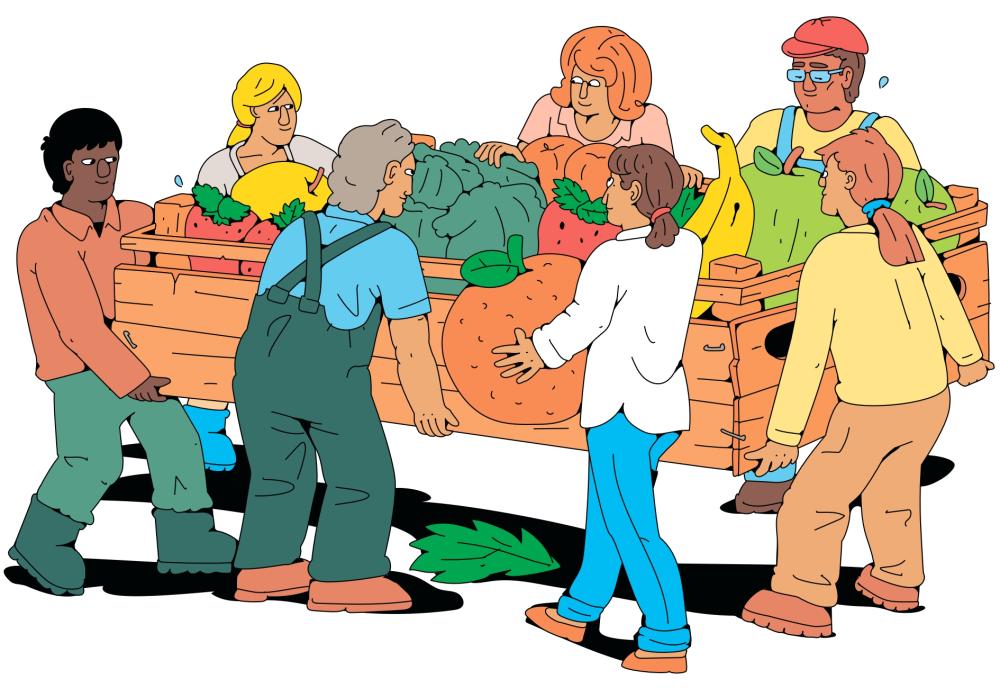
At the European and national level, there are four main types of instruments used by the state, regional governments, and their various partners to facilitate farm transfers and help farmers, especially young farmers, establish themselves. These instruments are direct aid or investment support, tax reductions, and reduced social charges. Additionally, land development and rural establishment companies (SAFERs) oversee the market for farmland. There are also initiatives providing information and support, largely run by programmes promoting farm transfer and farmer establishment that receive regional and national government funding. Farming permits are issued that help young farmers get their start. In some regions, farming planning policies prioritise applicants whose farm plans are more environmentally friendly.
- 12 544 farmers made aware of farm succession challenges by French chambers of agriculture in 2023
- 1 520 first-time farmers that got set up thanks to SAFERs in 2022
- 2/3 of the 19,250 potential farmers who visited start-up support centres between 2019 and 2022 ultimately got set up
- 38% benefitted from farm establishment support policies.
Farm transfers
However, there is room for improvement when it comes to farm transfers—farmers should do more to facilitate the succession process, and public authorities should develop better public policies. To this end, myriad factors must be taken into account: for example, farm prices are difficult to define, the market lacks transparency, available farms do not meet the expectations of new farmers, and there is competition between farm plans focused on establishment versus expansion.
A farm's value is more than the worth of its production components (e.g., land, buildings, livestock, equipment). INRAE’s Farm_Value project (2017–2021) highlighted the importance of intangible factors that can be difficult to quantify. For example, if the seller has a positive opinion of the buyer's ability to ensure the farm’s future, they are more willing to accept a lower purchase price during negotiations. In addition, a farm will have a higher value if it has organic certification or occurs in a zone with a protected designation of origin. Additionally, farm value is enhanced if a successor has already been identified. "For farmers, transferring their farms is a major life event. It is the measure of their lifelong labour and represents a commitment to guaranteeing the farm’s future," remark Laure Latruffe, INRAE economist and coordinator of the Farm Value project, and Philippe Jeanneaux, an assistant professor of rural economics at VetAgro Sup.
Modernising public support programmes
In 2023, a report by the Cour des Comptes (the French Audit Office1) stated that current instruments for helping with farm establishment and start-up were not entirely adapted to the existing diversity of farm models and profiles. They are gradually becoming ineffective, and they fail to support unique projects, such as those focused on short supply chains. Additionally, the farm aid system mainly benefits people who are younger than 40 years old, but one third of farms are established by people who are older than that. Lastly, the system’s administrative constraints are viewed as hurdles, and thus farm aid is rarely applied for.
That said, the system does provide access to collaborative support that new farmers find helpful. As a result, people are able to get a better handle on farm operations and reduce the drops in performance that generally occur in the first 3 to 5 years following farm transfer.
→ Test areas on farms allow prospective farmers to explore potential projects. More than 1,500 people have taken part in this programme since it was launched in 2007, and more than 81% of test projects focused on organic production systems.
→ Farmers without any family connections to farming can benefit from "internships”, where they gain practical experience in running their future farm, whether as the new head farmer or as a partner.
→ Before fully joining a GAEC, farmers can engage in a yearlong trial period and withdraw if the project does not suit them.
SAFERs and their partners have launched a capital fund—ELAN—whose purpose is to help the next generation of farmers become established. It supports young farmers, allowing them to get started in farming without needing to immediately invest in land, leaving that possibility for a later date.
Diverse initiatives
Over recent years, new farmers, most often those committed to sustainable practices, have been able to access land made available by local governments and organisations (towns, district communities, and public-private entities); national agricultural and rural development organisations (e.g., heads of networks, cooperatives, and federations); and agricultural support, training, and financing organisations (e.g., Eloi, FEVE, CowGestion, Terrafine, La Ceinture Verte, NeoFarm, Cultures et Compagnies). However, these efforts are generally local in nature and have limited human and technical resources, meaning their impacts are tiny (FEVE says it has helped finance 18 farms and convert 1,300 ha to agroecological farming since 2020, La Ceinture Verte mentions having helped 15 vegetable farmers get established). Another example is the "creative smallholder internships" offered by cooperatives that promote the establishment of small farms (CIAPs) in the regions of Centre-Val de Loire, Pays de la Loire, and Brittany. In addition, the CIAP of Centre-Val de Loire offers a temporary wage portage service, which allows farmers to get started without having to set up a business—the CIAP handles the administrative work and provides support for up to 3 years.
Other initiatives are also taking shape. As of 2023, the Terrena cooperative in northwestern France had spent 48 million euros over 5 years to help consolidate farms and facilitate farm transfer, regardless of farming type, model, or production system.
Collective action — the way of the future
Peer support can be a great help when a farmer is going through a farm transfer (e.g., outside perspectives, psychological support, ties to the land) or is adopting agroecological practices (e.g., resource sharing, help managing uncertainty). However, it is not always that simple! The people providing support must properly unite the relevant collectives and spur farmers to embrace this approach, when they might otherwise be far removed from it¹. Agroecological collectives such as economic and environmental interest groups (GIEEs), groupes 30 000, and DEPHY farms are structured to promote exchanges around their farming practices, as well as the sharing of agroecological experience and knowledge². Around 32,000 farmers are involved in these collectives (since 2010 for DEPHY Farms, 2014 for the GIEEs, and 2016 for groupes 30 000).
1. Cnudde C. et al. (2023) Explorer la voie du collectif pour relever le défi de la transmission en agriculture. Étude d’un groupe d’agriculteurs du Maine-et-Loire. 17es Journées de recherches en sciences sociales, Paris-Saclay, 14 et 15 décembre 2023.
Slimi C. et al. (2022). Revue d’anthropologie des connaissances, 16 (2).
Mobilising capital and land
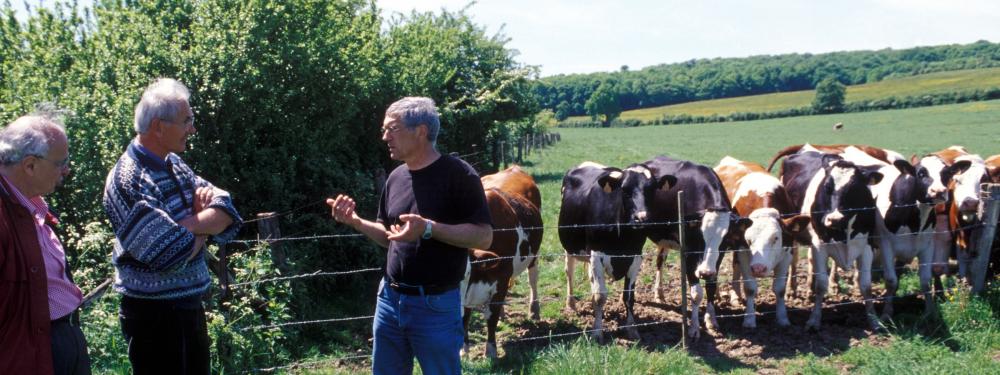
The cost of taking over a farm is a frequently cited hurdle for new farmers; it has also been mentioned as the source of the financial difficulties experienced during a farm’s first few years of operations. However, few data are available on this topic. A study looked at applications for the young farmer’s grant (DJA) submitted in the Puy-de-Dôme region by 1,251 farmers under the age of 40. It found that, between 2007 and 2022, the average cost of acquiring a farm was €79,457 and that farmers invested an average of €201,997 over the next 4 years, a sum equivalent to 70% of their total start-up costs. There was, however, a great deal of heterogeneity in these figures, reflecting the diversity in farm establishment types and farmer background2.
Loans played an essential role in financing all the start-up phases: they covered up to 80% of farm acquisition costs and 65% of investment costs. There was a very heterogenous relationship between grant award amounts and start-up costs. Indeed, award amounts are determined and refined based on the young farmer’s background, farm plan, and regional location; they are not directly affected by the amount invested by the farmer. Thus, the DJA is not a reliable source of funding for asset acquisition; instead, it acts as back-up financing to help young farmers with challenges they may encounter while getting established (e.g., lack of revenue, cash flow concerns, need for self-financing).
- 85% of France's UAA (22 million ha) is privately owned
- 5 ha = average size of plots owned by farmers, who are mostly men
- 35% of cultivated land (9 million ha) is farmed by its owners
- 14 = average number of land owners from whom
a given farmer leases land
Source : Terres de liens
uncultivated farmlands: Spaces waiting to be used
Abandoned due to a decline in agricultural activity or the possibility of a more profitable usage, uncultivated farmland provides an opportunity to (re)engage in sustainable agriculture. In Occitania, uncultivated farmland accounts for 1.2% (91,140 ha) of the region’s surface area and ~2.5% of its UAA (SCO Friches Agricoles project, 2022–2024). Just outside of Perpignan, organic industry stakeholders (transporters and processors) have identified 1,000 ha of uncultivated irrigable farmland farmers could use and to which they could relocate their supplies. In tandem, a group of sheep farmers is utilising uncultivated farmland to achieve feed autonomy and rear mountain livestock (Fricato project, 2015–2017). More generally, uncultivated farmland is often used to implement environmental, agricultural, or energy transition policies. The FRICHAGRI project (2025–2028) is examining the power-based relationships behind these dynamics.
Factors preventing and promoting the agroecological transition
"Shifting to an agroecological approach represents a major professional change that is costly for farmers,” says Xavier Coquil, an INRAE ergonomics researcher specialising in professional transitions and the accompanying support mechanisms. He continues, "They know what they are leaving behind, but they do not yet know where they are headed. In this transitional space, they must acquire a new type of experience, a process that requires mourning past types of experience. It is a change in their ways of doing and thinking, in their relationship with the living world as well as the socioeconomic environment, which gradually moves forward because of an initial source of momentum."
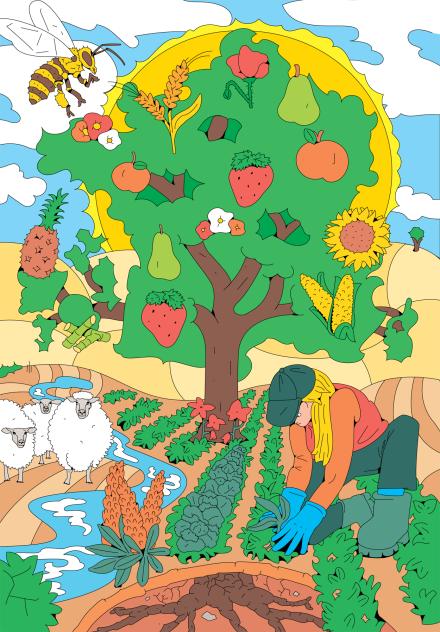
Sociotechnical bottlenecks can stymie the agroecological transition at several levels:
→ at the individual level: lack of knowledge about new farming practices and the absence of appropriate advice; some farmers' reliance on conventional farming yields, which are higher in the shorter term and therefore provide a greater sense of financial security
→ at the farm level: lack of land available for developing alternative practices or the appreciable size of previous investments in a given technical system to become profitable; potentially unsuitable equipment and raw materials
→ at the supply-chain level: uncertainty around product outlets, from storage to processing to sales
→ at the regional level: natural resource management regulations must be modified to allow certain practices (tree ownership, management of common pastures)
→ at the national level: absence of the scientific knowledge or public policy support needed to guide farmers; lack of data and supportive evidence to facilitate shifts towards new production systems.
Regardless, "by beginning to adopt agroecological practices, farmers regain their professional footing [...]. It is riskier, but it brings greater job satisfaction,” affirms Emmanuel Poussard, an occupational psychologist at CNAM (Vaucluse agricole, 2023).
Research on farmers who have adopted more sustainable agricultural systems reveals that individuals expressed positive emotions about their relationships with others (e.g., guiding, working together, receiving inherited knowledge) and with their farms (e.g., understanding one's land, experimenting, experiencing pleasant surprises)3.
These positive experiences are also likely to boost the attractiveness of agricultural professions and encourage people to re-engage with their work. For farmers in financially precarious positions who are committed to saving their farms, adopting agroecological practices has proved beneficial from an economic perspective and has also increased their autonomy, happiness at work, meaning, and consistency4.
New practices require a complex level of commitment
In her recent doctoral research, Camille Berrier, an INRAE engineer in social psychology, showed that there is a link between a farmer’s commitment to agroecological practices and the meaning they ascribe to their work. This meaning is shaped by their investments and experiences in different socialisation contexts; their relationships with the region, public policies, and institutions; and their personal relationships (e.g., family history, career path) and interpersonal relationships (e.g., job history, peers).
CA-SYS, Testing agroecology at large scales
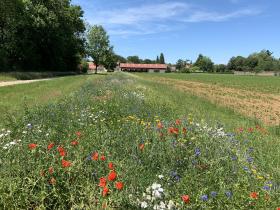
INRAE runs the CA-SYS platform, a 125-ha collaborative facility for experimental research located in the region of Bourgogne-Franche-Comté. It can carry out assessments of whether agroecological systems with breakthrough innovations are feasible. To this end, CA-SYS uses updated experimental methods that combine various approaches: breeding plant varieties, minimising inputs, exploiting biological interactions, and structuring agricultural space.
Its collaborative efforts bring together farmers, technicians, educators, and researchers. Each year, it hosts around 150 students in agricultural training courses (BTSA) to help the farming of the future flourish.
Women: key facilitators of the agroecological transition
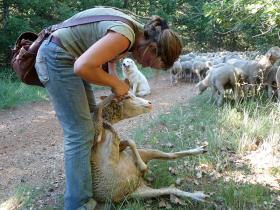
Women farmers are often the impetus behind a farm’s decision to go organic. They are highly concerned about their family's health and environmental issues. They also tend to handle farm administration and accounting, which means they are aware of the farm’s economic situation. Lastly, they are more likely to organise farm workshops, notably to create stronger relationships with consumers (FNAB, 2018). In 2020, women represented a quarter of all farmers, joint farmers, and associates on organic farms. More generally, these same patterns are seen when it comes to the implementation of agroecological practices, which are motivated by care and consideration for others (TRANSAÉ project, 2016–2020).
Building coherent public policies
We need to take urgent action to deal with climate change and biodiversity losses as well as to preserve France's agricultural and food sovereignty. French agriculture must be properly equipped if it is to navigate these challenges and renew its workforce. While agricultural training and farm establishment are directly influenced by agricultural policies, farming and farming conditions are strongly shaped by food, environmental, energy, and trade policies. To this end, it would be helpful to implement more cross-cutting policies that simultaneously address agricultural, food, environmental, and even health issues5.
At the European level, only the Common Agricultural Policy (CAP) is truly integrative. While it supports young farmers who are already established, it does not help farmers who are just getting started nor does it facilitate farm transfers. In the early 2000s, CAP reforms introduced certain "greening measures": a) direct payments to farmers became contingent on the adoption of environmentally friendly practices and b) a second pillar was created. "Since Member States are free to grant exemptions from these greening measures, the latter have been rarely applied. There have been few impacts of pillar two measures promoting environmentally friendly practices and the agrienvironmental measures," comments Cécile Détang-Dessendre, an INRAE economist. Since then, agricultural and food systems have been at the heart of policy developments further emphasising agroecology, seen as a promising approach for facilitating the transition to more sustainable farming. Notably, we have seen the Farm to Fork and Biodiversity 2030 strategies, which are tied to the European Green Deal (2019) and the new CAP (2023–2027).
Measures promoting the generational renewal of farmers are found elsewhere, such as in the final report for the strategic dialogue on the future of EU agriculture (September 2024), which describes the environmental, economic, and social challenges faced by European agriculture. Its recommendations include the following: strengthening the position of farmers in the food value chain, supporting sustainable agricultural practices, adopting new measures to better preserve and manage farmlands, and, of course, renewing the farm workforce. France is "one of the countries to have adopted the most explicit and ambitious agroecology policies worldwide"6. It is also the only EU country to have developed a public policy framework focused on agroecology (AE4EU, 2021–2024).
On May 28, 2024, the French National Assembly adopted at first reading two bills centred on the generational renewal of farmers and strategies for managing agroecological and climate-related transitions: the Pacte pour le renouvellement des générations en agriculture and the Loi d'orientation pour la souveraineté agricole et le renouvellement des générations en agriculture. These two issues are key challenges. The above legislation laid out an objective: having "at least 400,000 farms and 500,000 farmers [in France] by the end of the 2025–2035 programming period." These figures are equivalent to those for 2020 and thus aim to replace all outgoing farmers. The goal was for 50% of all farms to begin to adopt agroecological practices starting in 2025. The Pacte considered that farmer training programmes would be transformed by the inclusion of new knowledge on agroecology, education being an essential tool in ensuring the success of these transitions.
Making it easier to become a farmer and providing support for agroecological farm plans are important actions when it comes to helping farmers establish themselves. However, also important are farmers' working conditions and the viability of their farms. They all play a decisive role in farmer success and farm persistence.
1. url.inrae.fr/49Ojbp2
2. Jeanneaux P. et Latruffe L. Coûts et financement de l’installation aidée entre 2007 et 2022 : éclairages à partir du cas du Puy-de-Dôme. 17th Annual Social Science Research Days, Paris-Saclay, December 14–15, 2023.
3. Barbier C. et al. (2015). Activités, 12-2. url.inrae.fr/3ZYzo6y
4. solidaritepaysans.org
5. Read the article: url.inrae.fr/401gjlt
6. Place F. et al. (2022). url.inrae.fr/49PsTHH
-
Catherine Foucaud-Scheunemann
author / translated by Jess Pearce
Communication head office -
Cécile Detang-Dessendre, Nathalie Hostiou and Laurent Piet (INRAE), François Purseigle (INP Toulouse)
Scientific board
-
Lionel Serre
Illustration