

Ressources dossier
Society and regional strategiesEducation and innovation drive transitions
Transitioning to more sustainable production systems requires a major shift in thinking, knowledge acquisition, and practices, a process in which education plays a key role. Agricultural training programmes are important in these efforts and receive support from INRAE. Spotlight.
Published on 23 July 2026

Transitioning to more sustainable agricultural systems is a complex endeavor. It entails complicated deliberations and can be tricky to implement because of the many stakeholders and processes involved, the knowledge to be integrated, and the levels of organisation to be considered. Agricultural education programmes provide a crucial stepping stone.
Agricultural education programmes for training future farmers
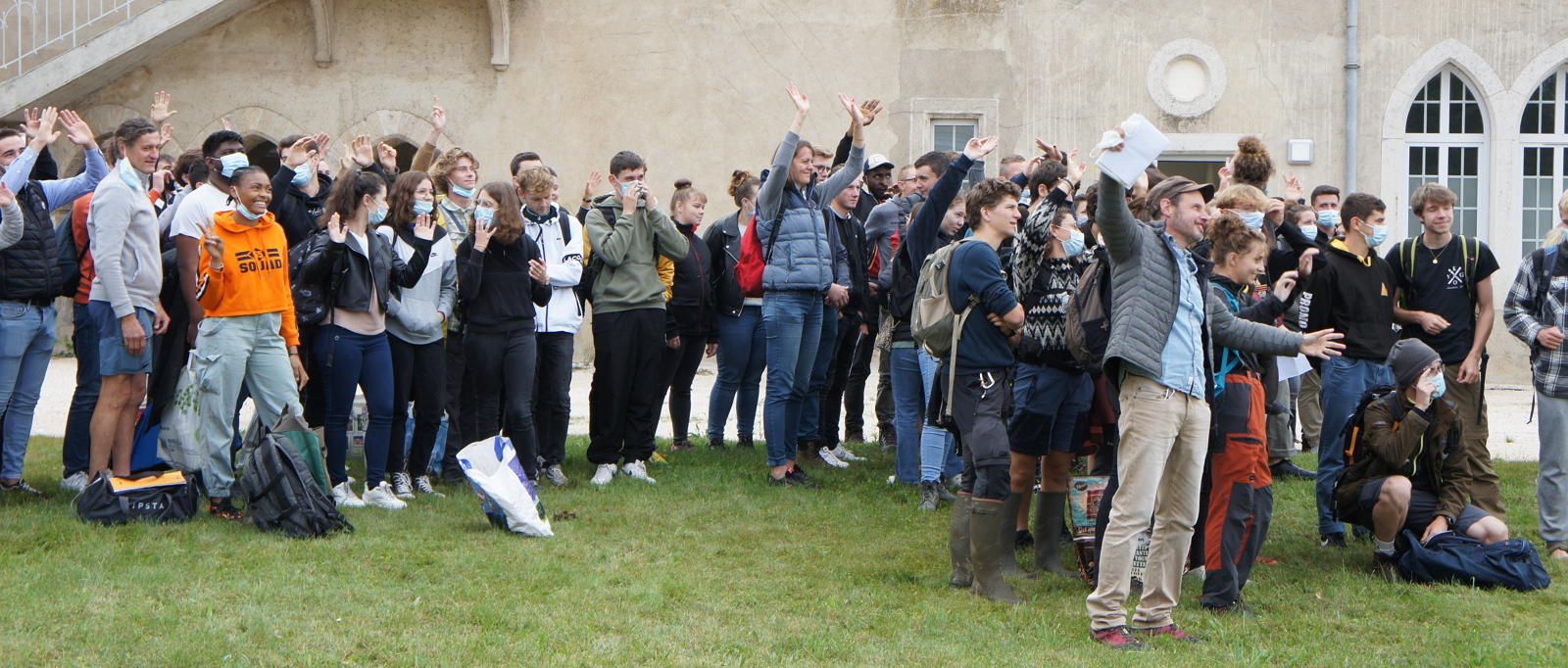
In September 2008, major curriculum changes were made to degree programmes in agricultural vocational training. Now, there is a greater emphasis on sustainable development and the diversity of agricultural production systems. At present, all basic agricultural training addresses transitions, animal welfare, and agroecology, a content shift that INRAE helped bring about. During their training programmes, students can explore various farming tools and methods via field projects, projects carried out on farms, and technology workshops. These activities also provide opportunities to meet local stakeholders who are potential future collaborators.
While enrolment in these programmes declined 5.5% between 2012 and 2018, the trend has since reversed: there was a 4% increase in trainee numbers between 2019 and 2022.
This climb likely resulted from large-scale programmes and action plans to which INRAE contributed. The French Ministry of Agriculture and Food Sovereignty implemented two successive plans aimed at teaching future farmers to produce food differently: the first added agroecology to the core content taught in agricultural training programmes (2014–2019), and the second expanded the scope of this content (2020–2024). These efforts were shaped by collaborations with educational staff, trainees, and curriculum creators as well as with the farmers and technology workshop leaders who provide pedagogic support. Changes were also made to governance policies within educational establishments and the regions where these establishments are located.
In 2019, a multiyear communication strategy was launched to educate and guide young people towards farming careers and agricultural training programmes. In its wake, a campaign was started to raise awareness about the diverse careers and prospective jobs associated with the life sciences and the agricultural industry. Two years later, the country’s recovery plan France Relance launched another campaign—L'enseignement agricole, #CestFaitPourMoi (Agricultural Education, #It'sMadeForMe). It focused on two major issues: offering up a vision of the future of farming and recruiting the next generation of farmers.
Public and private higher education establishments that specialise in agriculture have national and international master’s programmes in agroecology. They also address agroecological transitions from theoretical and applied perspectives in their curricula. Additionally, they are conducting research on current major challenges, as part of collaborations with national research organisations, technical institutes, and universities.
Steps have also been taken within the EU to bolster the attractiveness of agricultural professions and training programmes. In particular, Erasmus+ projects have fostered innovations in priority areas such as agroecology, crop adaptation to climate change, and food sovereignty. In 2022–2023, more than 10,000 students in agricultural training programmes received Erasmus+ mobility funding that allowed them to travel for their studies or to do internships.
However, agricultural training programmes cannot be the sole vehicle for these changes. Indeed, future farmers will also learn their trade through interactions with family members, peers, advisors, and industry stakeholders. Such will likely limit the influence of educational institutions on agricultural practices1.
Agricultural training in 2023-2024
- 802 agricultural vocational schools: 8th grade to BTSA (advanced vocational degree)
- 16 public and private higher education establishments specialising in the agricultural, veterinary, and landscape sciences: bachelor's degrees to PhDs
- 216,000 students and trainees pursuing vocational training and higher education (up from 190,000 in 2020)
Fueling transitions
Continuing education also has a key role to play in facilitating these transitions. Continuing education programmes are run by a large network of public establishments, including the Centres de Formation Professionnelle et de Promotion Agricole, which confer agricultural degrees equivalent to the baccalauréat. In particular, they offer vocational training to anyone interested in transitioning to a career in farming. These programmes teach the professional skills needed to qualify for farm start-up aid. There are also non-degree training courses run by associations and other organisations.
Supporting farmers in their daily lives
When a farmer adopts practices better adapted to present-day agricultural challenges, they require customised, long-term support.
Research carried out with sheep farmers in the Roquefort area has shown that chamber of agriculture advisors are changing the type of guidance they provide: their recommendations extend beyond technical matters to touch upon social, societal, and structural issues. The relationship between farmers and agricultural advisors is becoming more collaborative (ATA-RI project, 2016–2021).
The same is occurring in cattle farming: in an applied-learning community made up of farmers, advisors from CIVAM (centres for initiatives to promote agriculture and rural environments), and instructors from agricultural and scientific high schools, advisors now emphasise the experiences of farmers, exploring the professional, interpersonal, and even highly personal forces at play (TRANSAÉ project).
This work underscores that collaborations must be constructed within and among organisations at a regional scale. It also gives rise to questions regarding the mandates given to advisors by their employers and the governmental actions taken to support farmers. Research on the work situations of advisors in a dozen advisory organisations across France has shone a light on the benefits and feasibility of in-house exchanges among advisors. Both advisors and their superiors recognise the added value that comes from implementing systems that enhance professional development2.
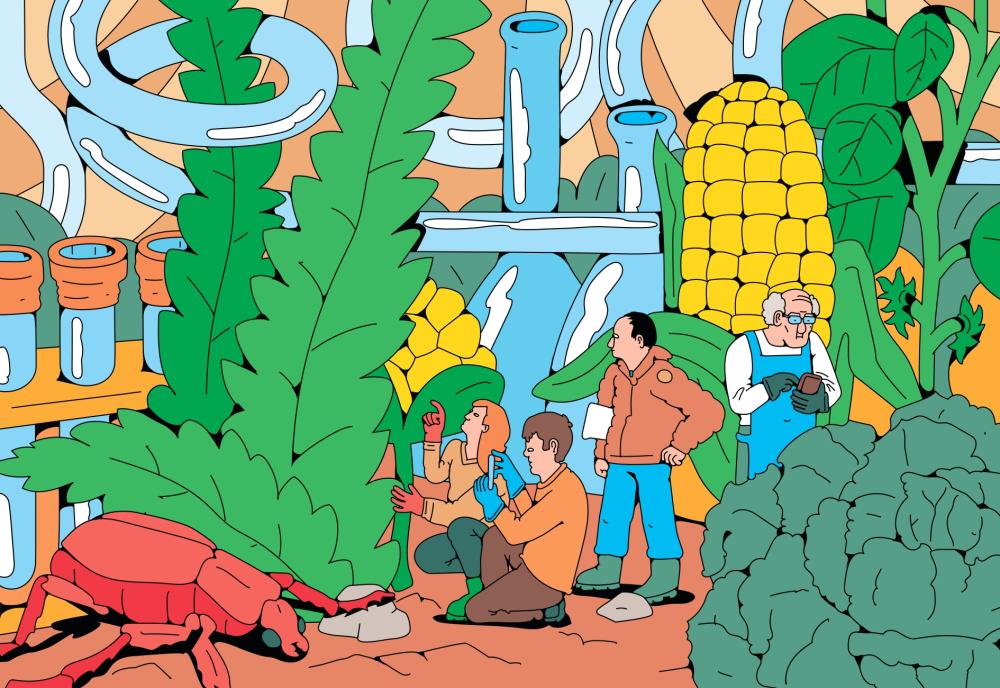
Do social media facilitate acculturation?
Farmers have different relationships with the internet: 46% say they are forced to use it, 23% say it saves them time, and 31% say they are online all the time and view the internet as an everyday tool they cannot do without. Internet-using farmers are slightly younger than the farming population as a whole, and they tend to utilise social media (68%). They have a preference for YouTube (57.5%), then Facebook (54%) and WhatsApp (51.4%) (Agrinautes study, 2022).
In the context of the agroecological transition, social media are a source of assistance. For example, they may trigger the desire to find out more, help consolidate practices, provide a platform for creating groups, and serve as a tool for designing and offering agroecological guidance and support services. Social media do more than just spread awareness about agroecological practices to the masses. They are a relational complement to in-person interactions, essential for the trust building that is required for practices to change.
What patterns are we seeing? Most farmers who have adopted agroecological practices regularly use social media—60% have been users for more than 3 years, and 30% have been users for 1 to 3 years. At the same time, the majority of these farmers are inconspicuous online: only 6% regularly act as facilitators or moderators, while 44% only read exchanges and 35% contribute to them.
While technical issues are at the forefront in these exchanges, there is also content supplying reassurance and emotional support (Agor@gri project, 2019–2022).
INRAE shares knowledge...
Research-based training is one of INRAE's top priorities. It occurs along the continuum of research, innovation, development, and training activities that are supported via close links with agricultural technical institutes and chambers of agriculture. INRAE has also made a commitment to providing basic training (around 29,000 hours/year at vocational institutes and establishments of higher education), fostering lifelong learning, and raising awareness.
Knowledge sharing has an even more important role to play given the dramatic renewal occurring in the agricultural workforce. It has become clear that collective learning experiences and the co-construction of solutions can help facilitate current transitions. INRAE has developed a diversified approach, which has been strengthened to meet present-day challenges.
One component is the institute’s mixed technology units and networks (UMTs and RMTs)3, which were created in the wake of France’s Agricultural Modernisation Act of 2006. These partnerships rely on shared scientific teams. The UMTs operate from a single location and bring together researchers and engineers, mainly from agricultural technical institutes, as well as advisors and educators. The RMTs operate as networks, uniting the same groups of people, along with farmers and agricultural high school instructors. INRAE is involved in 28 of the current 38 UMTs (~130 FTEs) and in 29 of the 30 RMTs, working alongside around 50 agricultural high schools.
The institute also participated in the NEFERTITI project (2018–2022), which set up a network of pilot and demonstration farms across Europe. The project’s objective was to improve the exchange of knowledge and the adoption of innovations by agricultural stakeholders. It brought together researchers, farmers, agricultural advisors, and students to discuss current agricultural challenges.
Every day, INRAE’s 18 research centres welcome students, farmers, and other stakeholders from the agricultural world, whether for internships or for visits of the institute’s units or experimental facilities. Every year, more than 15,000 farmers visit INRAE's experimental units and meet with researchers, engineers, and technicians4. "The structure of the French agricultural education system helps facilitate ties among agricultural high school farms, agricultural technical institutes, and INRAE units. Via myriad activities, the institute's experimental units encourage discussion between the research world and the world of agricultural vocational training, allowing the exchange of ideas related to the practical application of advances in technical knowledge,” explains Dominique Grevey, INRAE Director of Academic Partnerships, Regional and European Affairs.
...produced collaboratively
What if knowledge and innovations could be produced more collaboratively? Such is the goal of participatory science and research, where everyday citizens and professional scientists join forces to make scientific advances, efforts in which INRAE teams are involved. For example, the EcoVitiSol project was launched in 2019 and is coordinated by Lionel Ranjard, an INRAE researcher in soil ecology. It is exploring how the microbiological quality of wine-growing soils is influenced by agricultural production methods, research that is carried out on plot networks belonging to winegrowers involved in the project. Another example is the DIVINFOOD project (2022–2027). Led by INRAE sociologist Yuna Chiffoleau, it seeks to develop food chains that create value from underutilised agricultural biodiversity. The project is studying minor cereals and legumes (small spelt, emmer, cone wheat, grass pea, common bean, lupin, fava bean, pea, and lentil) in three geographical zones of Europe that are facing various climatic risks and socioeconomic challenges. It receives support from nine living labs.
LIVING LAB
A structure that brings together a wide range of public and private stakeholders, associations, or individuals to address a common issue within a given region, with the objective of testing out new services, tools, or usages under real-life conditions.
The ALL-Ready project (2020–2023) was coordinated by Heather McKhann, a European project manager at INRAE. It established a framework for the future European network of living labs and research infrastructures focused on the agroecological transition. "By sharing knowledge, which is sometimes highly local in nature, living lab stakeholders can structure and expand networks to have greater impacts while simultaneously shifting scales," explains McKhann. INRAE is part of the EU partnership Agroecology, which is pursuing the same objective. What are the benefits? Yann Raineau answers, "A European network linked to a large web of regional experimental zones that is driven to explore the hypothesis that agroecological development can be facilitated by the use of living labs, with a view to identifying innovations that make sense to stakeholders and that have the best chance of being deployed.” Raineau is an INRAE economist and coordinates the actions involved in setting up the European network of living labs.
Strengthening links between agricultural education and research
INRAE has gone beyond developing educational curricula and building strong relationships with higher education establishments focused on the agricultural and veterinary sciences. The institute is also committed to helping train instructors in agricultural education programmes, with the goal of sharing advances in knowledge. In July 2023, INRAE and the University of Toulouse organised the 26th European Seminar on Agricultural Advising and Education, which was an opportunity to discuss how these topics relate to the challenging transition to sustainable agriculture5.
Conclusion
Current data and analyses reveal that agriculture is experiencing profound shifts, shaped by internal dynamics as well as by external dynamics linked to global changes. Looking beyond issues related to training, quality of life at work, capital, income, and land, we can see that the future of farming raises questions about our broader societal goals. Farmers must continue to play a central role within their regions, supplying food, producing green energy, maintaining landscapes, protecting biodiversity, safeguarding various ecological services, and contributing to regional dynamics.
To this end, INRAE is deploying all its skills to accelerate the transformation of research results into actionable knowledge, which can be transmitted by basic or continuing education programmes and by agricultural advisors. The objective is to encourage the renewal of the agricultural workforce and help sustainably bolster France's food sovereignty.
1. David M. (2019). Revue des sciences sociales, 62, 41-32. url.inrae.fr/3C1zvGu; Benet Rivière J. et al. (2024). Norois, 271, 41-52. url.inrae.fr/3BOySjG
2. Omon B. et al. (2019). Innovations agronomiques, 71, 367-383; url.inrae.fr/40lNW1p
3. url.inrae.fr/41LasSK; url.inrae.fr/3DIYxe4
4. Read the article: url.inrae.fr/4ebe431
5. Read the article: url.inrae.fr/48FeI64
-
Catherine Foucaud-Scheunemann
author / translated by Jess Pearce
Direction de la communication -
Cécile Détang-Dessendre, Nathalie Hostiou and Laurent Piet (INRAE), François Purseigle (INP Toulouse)
Scientific board
-
Lionel Serre
Illustration