

Food, Global Health Reading time 5 min
Health, water and digital technologies: TSARA addresses Africa’s food system challenges
Child nutrition, the cold chain, water management, digital agriculture, and geospatial technology are all critical issues for African food systems, and key areas of focus for projects led by TSARA, a research network bringing together nearly forty institutions across Africa and Europe. Here is an overview of current and upcoming projects.
Published on 19 May 2026

On a track in Casamance, a truck loaded with mangoes is making its way to market. Inside, a sensor reads 38°C at the centre of the load. There are no apparent problems, yet part of the harvest will be lost. In Senegal, stakeholders in the mango sector estimate post-harvest losses at between 20% and 30%; almost 45% of all fruit and vegetables never reach consumers — a major source of waste that affects both producers’ incomes and local food security.
Some of these losses, however, can be avoided through simple adjustments guided by research. This is precisely the kind of knowledge TSARA produces: solutions based on the reality of African territories. The initiative, launched in 2022 by INRAE, CIRAD and 17 African partners, Transforming Food Systems and Agriculture through Research in Partnership with Africa, now brings together 38 institutions across Africa and Europe, working around nine themes: agroecology, water, soils, agroforestry, livestock, nutrition, One Health, labour and digital technologies.
Preventing mangoes from going to waste before they reach the market
The AFRICOLD project, led by INRAE’s FRISE unit, Cheikh Anta Diop University in Senegal and the University of Dar es Salaam in Tanzania, focuses on three strategic and vulnerable sectors: mangoes and carrots in Senegal, and avocados in Tanzania. “Our aim is to work with our African partners to identify the most useful, resource-efficient and realistic solutions to reduce losses and secure incomes. TSARA enables us to design research based on the real constraints and priorities of local teams and supply chain stakeholders,” the project team explains.
At first sight, the verdict seems obvious: if mangoes are being lost, it is due to a lack of refrigeration. Field data, however, call this diagnosis into question and reveal two realities, both of which are nonetheless marked by damage by the mango fruit fly from the orchard onwards. In the export sector, the cold chain exists, but the fruit are rarely cooled before loading, which makes it less effective. In the local sector, the problem lies elsewhere: a total lack of cold storage, saturated markets, and transporters who dictate their own terms. Two distinct diagnoses, therefore, call for two types of solution to be developed with local stakeholders. The next step will be to test low-input technologies under real conditions — with lessons that are also useful for Europe, where climate change is increasingly exposing agricultural sectors to episodes of extreme heat.
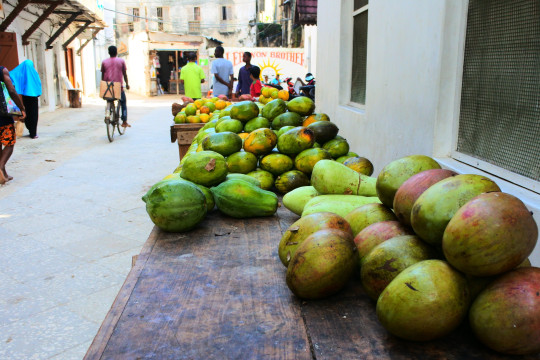
In addition to post-harvest losses, there are two other problems. The first concerns food security, which remains a major issue for the continent, as the FAO points out, and is influenced by climate, economic and demographic changes. The second concerns nutrition: rapid urbanization and the increase in processed foods have transformed diets, leading to undernutrition, deficiencies and overweight to coexist within the same countries, and sometimes within the same households. In both cases, solutions cannot simply be imported: they depend on the ecological, economic and cultural contexts in which they are rooted.
Local legumes for infant nutrition
In Cameroon, as in many sub-Saharan African countries, infant malnutrition persists. The porridges traditionally given to infants after six months of breastfeeding meet basic energy requirements, but are low in protein and poorly balanced in essential amino acids and micronutrients. Although fortified infant cereals do exist, they are usually imported, expensive, or distributed through channels that are beyond the reach of many rural and peri-urban families.
“The whole point of our project is to promote these local legumes, in order to produce nutritious, safe flours for young children, adapted to local practices and based on simple, accessible processes.”
In response to these two problems, the MinimaLeg project focuses on resources already present locally: legumes grown and consumed in Cameroon, but about which little is known in terms of their diversity and uses. “The whole point of our project is to promote these local legumes, in order to produce nutritious, safe flours for young children, adapted to local practices and based on simple, accessible processes,” explains Adeline Boire, project leader at INRAE’s Biopolymers Interactions Assemblies Research Unit (BIA).
The TSARA-endorsed project brings together INRAE’s BIA and Agropolymer Engineering and Emerging Technologies (IATE) units, the QUALISUD Joint IRD/CIRAD Research Unit with Cameroonian universities in Yaoundé, Douala and Bamenda. Rolled out across five agroecological zones, it aims to systematically document, for the first time, the legumes grown and used in Cameroon, then to connect this diversity with local processing practices, the nutritional quality of the seeds, and low-input processes such as hulling, grinding and separation.
The first results are expected in summer 2026. “This two-way perspective between African and European contexts is undoubtedly one of the project’s most valuable contributions, as it opens up avenues for innovation that are not only technological, but also organizational and cultural.” Within TSARA, the collaborative dynamic has helped expand scientific exchanges, particularly towards new questions concerning seed microbiomes.
Documenting plants associated with breastfeeding
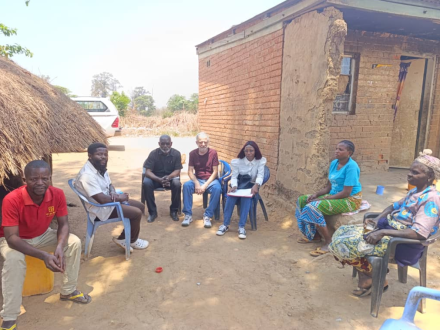
In south-eastern Democratic Republic of the Congo, the Université Nouveaux Horizons in Lubumbashi and the Pathophysiology of Nutritional Adaptations Joint INRAE/Nantes University Research Unit (PhAN), are collaborating to document breastfeeding practices during the first months. Initial surveys were conducted with 65 mothers in healthcare facilities. “While 81% of mothers breastfeed when their baby is born—which is very high—almost two out of three were slow to start breastfeeding,” says Francisca Ngenda Kabombo, a PhD student at PhAN. These findings highlight “the need to support mothers in healthcare facilities and to train healthcare staff, both in breastfeeding practices and in maternal nutrition.”
The StimLactationPlants DRC project also focuses on galactagogue plants, traditionally used to stimulate milk production. In the DRC, these plants remain “very poorly documented from an ethnobotanical, pharmacological and clinical perspective, despite the richness of Congolese plant biodiversity and the importance of traditional knowledge in maternal and neonatal health,” notes Clair-Yves Boquien, a researcher at PhAN and co-supervisor of the thesis.
Surveys conducted among mothers, as well as among practitioners of traditional medicine—using medicinal plants, rituals or local cultural practices—set out to identify these plants and how they are prepared and administered. The project then plans to extract and characterize the compounds likely to affect lactation, before testing their effects in preclinical models. In the longer term, the teams also hope to contribute to setting up a human milk bank in Lubumbashi, to meet the breastmilk needs of premature infants.
Traditional foods and their effects on the microbiota
Mabisi, a traditional fermented milk product which has been consumed in Namibia and southern Africa for generations, is now being studied as part of the Diet-RestorPro project, which brings together the University of Namibia (UNAM), Cape Peninsula University of Technology (CPUT) in South Africa, and INRAE. Could this food, along with other African fermented products, help treat chronic inflammatory bowel diseases—Crohn’s disease and ulcerative colitis—whose prevalence is increasing?
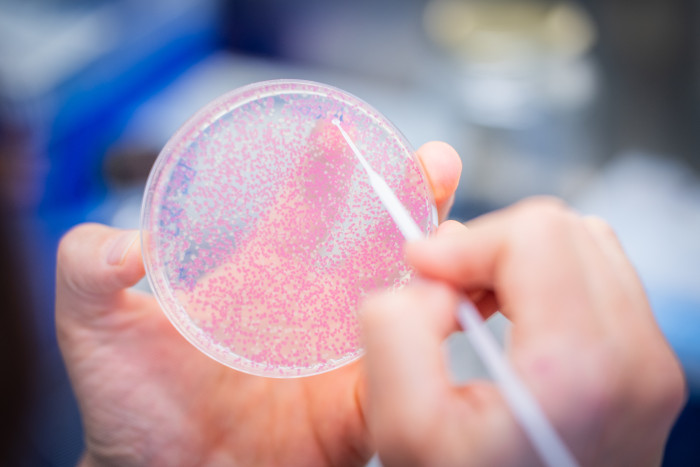
The preliminary laboratory results are encouraging. Mabisi shows significant effects on proteins involved in intestinal inflammation; Omashikwa and Omaere also have an effect on several inflammatory markers. The products tested also show activity on enzymes related to fat digestion and blood-sugar regulation, opening up research avenues beyond intestinal diseases, particularly regarding obesity and diabetes.
“What gives this project particular impact is its ability to connect traditional knowledge with cutting-edge science, and to identify accessible solutions to major global health challenges. If this work is successful, it could pave the way for simple, diet-based strategies to complement existing treatments,” - Moez Rhimi
The teams are now working to determine whether these effects are confirmed under real-life consumption conditions. The University of Namibia prepares the foods using traditional fermentation methods, the Cape Peninsula University of Technology analyzes their biochemical composition, and INRAE characterizes the microbial communities and validates the experimental models.
“What gives this project particular impact is its ability to connect traditional knowledge with cutting-edge science, and to identify accessible solutions to major global health challenges. If this work is successful, it could pave the way for simple, diet-based strategies to complement existing treatments,” says Moez Rhimi, INRAE researcher and the Diet-RestorPro project coordinator.
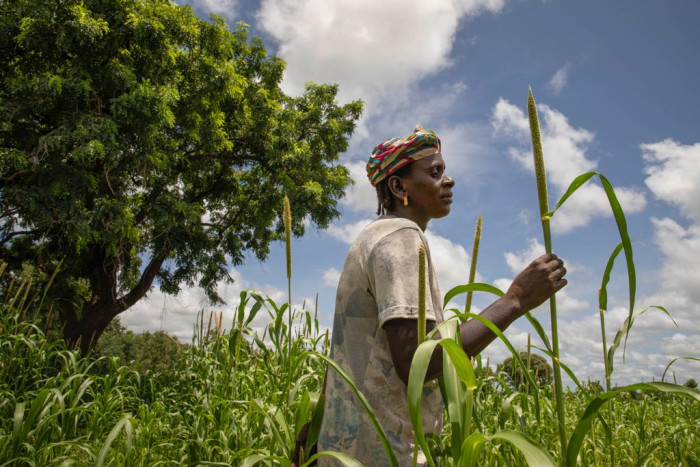
The FAMA project—coordinated by CIRAD with the participation of Emmanuelle Maguin from INRAE—is exploring a similar question in South Africa and Senegal: can traditional plant foods such as sorghum, amaranth or fermented products help improve health through the gut microbiota? The initial observation is well documented: the rapid transformation of diets, linked to urbanization and the rise of processed foods, has led to a decline in the consumption of traditional local foods.
“Thanks to TSARA, we are working in true partnership with African stakeholders, to develop practical solutions based on local realities.”
FAMA project team.
INRAE contributes expertise on the interactions between food and health. “With FAMA, we are demonstrating that traditional African foods are not only a matter of cultural heritage: they can become very concrete levers for improving health and transforming food systems. The initial findings, both scientific and field-based, confirm the potential of this approach and identify the barriers to their use in a country with a highly urban population. Through TSARA, we are working in true partnership with African stakeholders, to develop practical solutions based on local realities,” the project team observes.
The first results show that sorghum and amaranth do not have the same effects on the microbiota from one individual to another, a variability that raises questions about the personalization of dietary recommendations. In practice, local companies have improved their products by incorporating these data, and demand for certain traditional crops, such as amaranth, is on the rise.
Facing water scarcity: local solutions for agriculture
Producing healthy, accessible food also requires addressing a more fundamental issue: water. How can we help regions facing water stress transition to more sustainable agricultural practices, while keeping in view the food and nutritional needs of their inhabitants? The MAHDIA project, led primarily by CIRAD with support from INRAE, addresses this question in Meknes, Morocco; Kairouan, Tunisia; and Fatick, Senegal. Three arid or semi-arid regions, three different agricultural systems, and one shared approach: bringing together farmers, local authorities and consumers to jointly develop solutions around specific products - olive oil and faba bean in the Maghreb, millet and cowpea in Senegal.
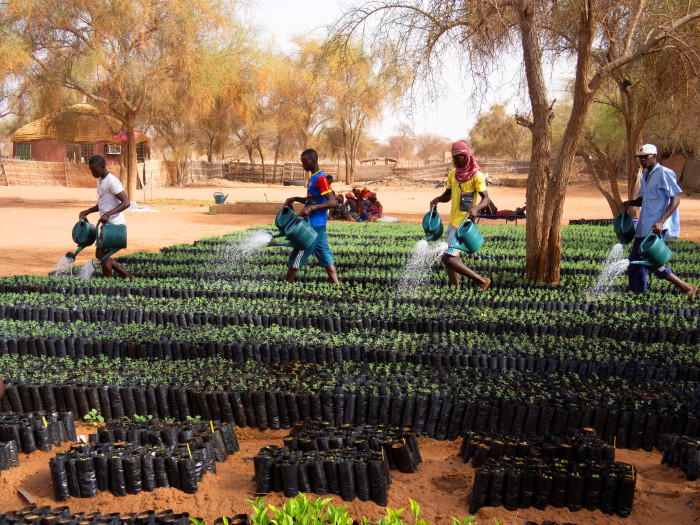
MAHDIA brings together three joint research units based in Montpellier—G-EAU, Innovation and MoISA–associating INRAE and CIRAD on water management, innovation and food systems. This is the first time that the G-EAU and MoISA units, specializing respectively in water and agroecology on the one hand, and food systems on the other, have worked together. “The agroecological transition links agricultural production and the constraints it faces in accessing natural resources with food and nutrition issues for consumers, by integrating the concept of adding value to agroecological products,” explains Sami Bouarfa, deputy head of INRAE’s Aquatic Ecosystems, Water Resources and Risks (AQUA) division and contributor to the project.
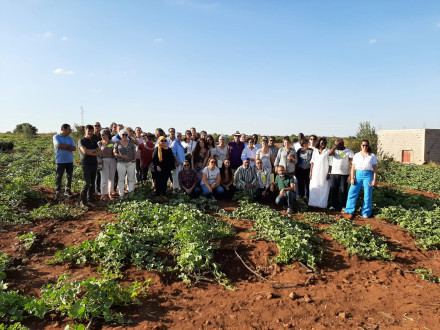
MAHDIA’s main conceptual development is the idea of “products of local interest”: the notion that certain local products can serve as levers to coordinate agricultural, food and environmental policies within a single territory. The project has also enabled the creation of a new research partnership between ISRA in Senegal, the Ecole Nationale d’Agriculture (ENA Meknès) in Morocco, and the National Institute of Agronomy of Tunisia (INAT) - a collaboration made possible in particular by the framework provided by TSARA. As proof of its success, the teams are planning a follow-up with MAHDIA2, which could be developed as part of a Horizon Europe project, while MAHDIA is due to conclude in November 2026.
At the same time, in regions where agricultural water is becoming scarce, the reuse of non-conventional water in agriculture is among the solutions being studied. Initiatives are flourishing across Africa, led by universities, NGOs, and public and private actors; however, they are developing in an isolated manner, and their findings are not widely shared. Supported by TSARA’s task force on water and led by Jérôme Harmand (INRAE-LBE), the REUSE4 Africa project brings together teams from Tunisia (LAMSIN/ENIT and the REACT association), Morocco (AQUABIOTECH and Université Cadi Ayyad), Benin (University of Parakou and University of Abomey-Calavi), and France (INRAE-LBE and IRD-HSM). Together, the scientists are seeking to coordinate these scattered initiatives into a network capable of producing a shared methodology and influencing public policy at the level of the African continent.
From field to satellites: building useful digital agriculture
Digital technology in agriculture is now considered a key driver for productive, environmentally-sound and income-generating agriculture - a vision shared by the FAO, the OECD, the World Bank and the national policies of many African countries. It can profoundly transform the way we produce, advise and create value: crop monitoring using remote sensing, personalized agronomic advice using artificial intelligence, and traceability systems to facilitate market access. In a dynamic environment that is encouraging data production and local initiatives in Africa, examples are multiplying: irrigation sensors developed in partnership with the Ecole Nationale d’Agriculture (ENA Meknes) and INRAE, AI-based agricultural advisory apps developed by NM-AIST in Tanzania, and QR codes at La Laiterie du Berger in Senegal.
Ressources dossier
AI and sustainable agriculture: local initiatives in AfricaIn its issue on AI and sustainable agriculture, INRAE’s Ressources magazine also explores developments under way in Africa: agritech, data science, academic research and scientific cooperation—including TSARA—around the use of AI in agriculture.
“The conditions for success identified in Africa—simplicity, accessibility and immediate utility—are very similar to those we see in France. Researchers working on digital agriculture in France will therefore learn from research conducted in Africa,” says Véronique Bellon-Maurel, emphasizing that interdisciplinary approaches are essential in order to develop technologies and their uses simultaneously. “These exchanges can also be facilitated through the #DigitAg International Research Community, a scholarly society launched at the CORDiALL digital agriculture conference, in which we expect a large participation of TSARA members,” she adds.

In Nairobi, the network has just launched a new geospatial component focused on the use of various types of data, methods and tools for agriculture. “Regarding remote sensing, since the rapid expansion of space-based resources in the 2010s, they have become essential for managing agricultural and natural areas, especially in hard-to-reach regions, as is often the case in Africa,” highlights Pierre Maurel, a researcher at INRAE.
These resources will make it possible to analyse dynamics that field surveys alone cannot capture, such as changes in agricultural landscapes, water resources, the condition of crops, soils and forests, the location of supply chains, or the spread of diseases. The next step is to bring together a community of African and European researchers, open to interdisciplinarity and operational research, capable of combining geospatial data with the major topics already being addressed by the network.
Satellite data for the planet: One Water Vision and One Forest Vision
INRAE leads two geospatial initiatives of international scope. One Water Vision develops information services based on satellite data to address the global water crisis: monitoring water resources, detecting water stress, and supporting large-scale water management policies. One Forest Vision focuses on monitoring tropical forests in Central Africa, the Amazon and Asia, using remote sensing to document their evolution, detect deforestation and support conservation policies.
Four years on: a collective demonstration
It all began with very concrete problems. The response has been equally concrete: in four years, TSARA has brought together 38 institutions around a shared objective - conducting research that is closely aligned to local realities. The projects discussed here—the cold chain, child nutrition, microbiota, water and digital technologies—are only a glimpse of the network’s broad scope, ranging from agroecology to soils, from livestock farming to One Health research. Yet from one area of work to another, a common approach to research is emerging, based on the complementarity of teams and long-term cooperation. TSARA members are demonstrating that another geography of research is possible - and already taking shape.
*TSARA (Transforming Food Systems and Agriculture through Research in Partnership with Africa) is an international initiative bringing together 38 member institutions in Africa and Europe. The projects presented in this article were funded notably through INRAE calls for expressions of interest and mechanisms under the Fonds Équipe France (French Ministry for Europe and Foreign Affairs).
AFRICOLD
Project coordinator: Fatou Toutie NDoye (INRAE-FRISE). Partners: Université Cheikh Anta Diop University in Dakar (UCAD, Senegal); University of Dar es Salaam (UDSM, Tanzania).
MinimaLEG
Coordinator: Adeline Boire (INRAE-UR BIA). Partners: BIA (INRAE, Nantes); IATE (INRAE, Montpellier); QUALISUD (IRD/CIRAD); Université de Yaoundé I (LabSAM, Cameroon); Université de Douala (Cameroon); Université de Bamenda (Cameroon). PhD co-supervised by Nantes Université / Université de Yaoundé I (2025-2029).
StimLactationPlantesRDC
Francisca Ngenda Kabombo, (PhD student, Nantes Université - INRAE PhAN and Université Nouveaux Horizons, Lubumbashi); Khadija Ouguerram (Nantes Université - INRAE PhAN); Clair-Yves Boquien (PhD supervisor, Nantes Université - INRAE PhAN); Paul MOBINZO (PhD co-supervisor, Dean of FSAE, Université Nouveaux Horizons, Lubumbashi, RDC). CIRAD participation: Charles DOUMENGE (eco-botanist) and Laurence BOUTINOT (ethnologist).
Diet RestorPro
Project coordinator: Moez Rhimi (INRAE). Partners: University of Namibia (UNAM); Cape Peninsula University of Technology (CPUT, South Africa).
FAMA
Project coordinator: Arlène Alpha (CIRAD). INRAE participation: Emmanuelle Maguin. Partners: ARC (South Africa); CIRAD; CSIR; INRAE; Université Cheikh Anta Diop (Senegal); University of Pretoria; University of the Western Cape (South Africa).
MAHDIA
Project coordinator: Olivier Lepiller (CIRAD, UMR MoISA). INRAE participation: Sami Bouarfa (UMR G-EAU). Partners: UMR G-EAU (CIRAD and INRAE, Montpellier); UMR Innovation (CIRAD and INRAE, Montpellier); UMR MoISA (CIRAD and INRAE, Montpellier); ISRA (Senegal); ENA Meknès (Morocco); INAT (Tunisia).
REUSE4Africa
Project coordinator: Jérôme Harmand (INRAE-LBE, Montpellier). Partners: LAMSIN/ENIT, Université Tunis El Manar (Tunisia); REACT, Association Tunisienne de Développement Durable (Tunisia); AQUABIOTECH, Université Cady Ayyad (Morocco); University of Parakou and University of Abomey-Calavi (Benin); IRD/HSM (France).