

An international microbiome observatory and a new milestone for PREZODE: two major scientific initiatives at the One Health Summit
A new international scientific infrastructure dedicated to characterising the microbiomes of human populations worldwide has been launched, while the global coalition for the prevention of zoonoses, PREZODE, has entered a new phase, supported by the World Bank and the involvement of new countries. Both announcements feature among the official commitments adopted at the One Health Summit held in Lyon co-chaired by Ghana and France.
Published on 08 April 2026

A global One Health observatory, an unprecedented research infrastructure
An alliance of 50 scientific cohorts spanning 25 countries across five continents forms the backbone of this initiative. This human microbiome cohort alliance will support the global One Health observatory—a new permanent infrastructure for the collection, harmonisation and analysis of microbiome data on a global scale. The observatory, announced on 8 April 2026, jointly coordinated by INRAE and VIB–KU Leuven, with support from Inserm, will be led by the World Microbiome Partnership.
Nearly 500,000 human microbiomes have already been characterised through this alliance. The aim is to reach one million human microbiomes by 2030—an unprecedented level of statistical coverage—before extending the scope of research to include soil, ocean and plant microbiomes from 2028 onwards. Although more complex, this expansion is essential to cover the entire One Health continuum.
The aim of these efforts is twofold: to produce knowledge which can be used for research and innovation and to provide policymakers and citizens with shared health indicators and access to microbiome-based solutions.
“The microbiome is both a driver and a solution to some of the most pressing challenges of our time: the rise of chronic diseases, antimicrobial resistance, biodiversity loss, climate change, and the transition of agricultural and food systems.”
— Philippe Mauguin, CEO of INRAE
What one million human microbiomes could unlock
Because the human microbiome varies greatly depending on factors such as dietary patterns, agricultural practices and exposure to contaminants, one of the key strengths of the alliance lies in the diversity of the microbiomes collected, with partners from dozens of countries with contrasting health and environmental contexts—including Germany, Armenia, Cambodia, Cyprus, South Korea, Egypt, Spain, the United States, Italy, Japan, Mexico and Singapore, among many others. Until now, research has faced several obstacles: the absence of harmonised standards across countries, differences in regulatory frameworks, and unequal access to innovation particularly for research teams in the Global South. Today, more than 70% of available human metagenomic data originates from North America and Europe. These are precisely the challenges the observatory intends to address.
“Characterising one million human microbiomes would help remove current barriers—with stakes that are as much methodological as scientific,” says Thierry Caquet, INRAE Vice-President of International Policy. “The strength of this approach lies in pooling the largest possible volume of standardised data.”
This statistical power could help identify signatures on a global scale, develop early-stage diagnostic biomarkers, advance personalised therapeutic solutions, and train large-scale predictive models, particularly via artificial intelligence, thereby opening up new prospects in personalised medicine and precision nutrition. There is also an economic stake: the global market for microbiome-based products for human health is estimated at $1.4 billion in 2027, while the market for agricultural applications (biostimulants for crops, microbial additives for livestock, and soil microbiome restoration) is estimated at nearly $12 billion for the same period.
“This ambitious international project requires commitment at every level—from government institutions to funding bodies—to support its development and foster dialogue between science and policy-making.”
— Philippe Mauguin
Shotgun metagenomics: French expertise since 2010
France has played a pioneering role in the development of shotgun metagenomics since 2010, notably through the MetaHIT project (2008–2013), a European consortium involving 13 partners from eight countries and funded by the European Commission, with INRAE as scientific coordinator. A publication in Nature in 2010 established a reference catalogue of the human gut microbiome, identifying 3.3 million genes—around 150 times more than the human genome. This resource has since served as the foundation for subsequent research into the diversity and functions of the human microbiome. The new global observatory builds on the national France 2030 PEPR SAMS and France Cohortes programmes, with €30 million already invested through Le French Gut project.
Extending the observatory in 2028 to soils, oceans, and agroecosystems is the next logical step. “Our microbiota is deeply influenced by our environment,” Thierry Caquet points out. “Diet, chemical exposure, and contact with soils which are polluted to varying degrees—all play a role. Microbial exchange occurs continuously among humans, animals, plants, water and soils. In many ways, this interconnectedness is at the heart of the One Health approach.” Microbiomes thus emerge as powerful indicators for guiding public policy and measuring its impact—whether in reducing agricultural inputs, tracking antimicrobial resistance, improving soil health or limiting pollution.
The World Microbiome Partnership
Established in 2023, the World Microbiome Partnership (WMP) operates as a global research initiative structured around microbiomes within a One Health framework. Bringing together actors from academia, industry and public policy, it aims to overcome both scientific and regulatory barriers while accelerating the development of applications—ranging from biomarkers to interventions—across human, animal and environmental health. The partnership is chaired by Joël Doré, Research Director at INRAE, with Emmanuelle Maguin, Research Director at INRAE and Secretary General of the WMP. INRAE plays a central role in its development, notably through its international priority programme Microbiomes and Planetary Health, which has helped structure this collaborative effort.
PREZODE: the World Bank joins the initiative for preventing zoonotic disease emergence
The World Bank has officially announced its support for the PREZODE initiative, with targeted support for projects in Central and West Africa. At the same time, PREZODE is expanding significantly. Seven new countries—Armenia, Cyprus, Côte d’Ivoire, Indonesia, Kenya, Libya and Mauritania—have recently joined, while its financial base has been strengthened by the entry of the Islamic Development Bank. Institutional partnerships are also being consolidated. Framework agreements have been signed with the Economic and Monetary Community of Central Africa (CEMAC), the Pacific Community (SPC) and Brazil’s Fiocruz, securing PREZODE within regional health systems across three continents.
Launched at the One Planet Summit in 2021 by CIRAD, INRAE and IRD, PREZODE now brings together more than 280 members and observers united by a shared objective: preventing the emergence of zoonotic diseases. The initiative is now part of the Global Outbreak Alert and Response Network (GOARN, coordinated by the World Health Organization).
Its governance is international in scope and relies on thematic working groups bringing together 87 experts from 36 countries. These are complemented by joint platforms with WHO, FAO and WOAH, focusing on disease emergence indicators, the economic value of One Health approaches, and science–policy–society dialogue.
“From the outset, we were convinced that only a science-based One Health approach could deliver the changes needed to prevent future pandemics. Five years on, PREZODE has reached a global scale, with governance involving 90 countries and ministerial engagement from 30 of them, operating at the interface between science and decision-making. The initiative is now internationally recognised, has developed joint activities with WHO, WOAH and FAO, and contributes to major global negotiations. We remain committed to its continued expansion, for the benefit of all and of the planet.”
— Élisabeth Claverie de Saint-Martin, Philippe Mauguin and Valérie Verdier, Chief Executive Officers of CIRAD, INRAE and IRD
“The question is not whether another pandemic will occur, but when—and where,” says Thierry Caquet. Over the past three decades, more than 30 new human pathogens have been identified, three-quarters of them of animal origin. Ebola, Nipah virus, avian influenza and COVID-19 are among the most extensively documented.
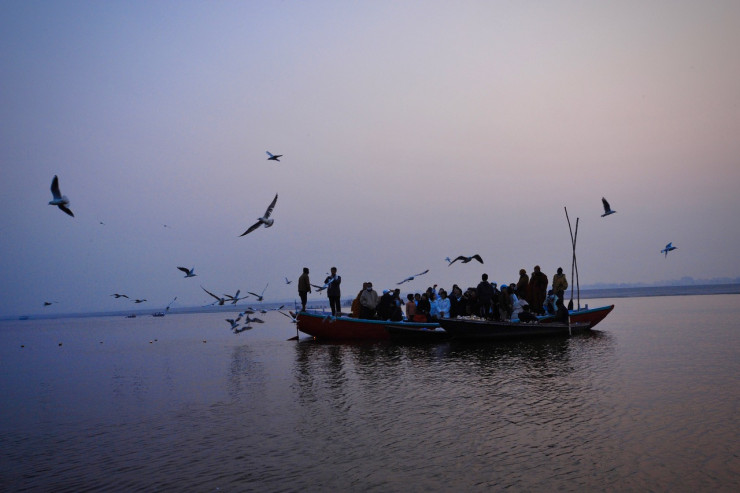
These emergence events are driven by converging pressures. Deforestation, agricultural expansion and urbanisation are reducing wildlife habitats, while climate change is reshaping species distributions. As a result, interactions between wildlife, livestock and human populations are intensifying, increasing the likelihood of spillover events from previously isolated ecosystems. An estimated 1.7 million unknown viruses are currently circulating in wildlife. Without a profound shift in prevention strategies, the pandemics they may trigger are expected to occur more frequently, spread more rapidly and cause greater mortality than COVID-19—a warning already issued by IPBES experts in 2020.
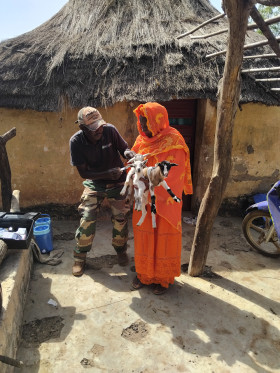
Yet prevention presents a structural paradox for public policy. “Prevention is inherently invisible,” Thierry Caquet points out. “As long as no crisis occurs, it can appear as an unjustified cost; when a crisis does arise, its absence becomes unmistakable.” According to IPBES, the economic cost of pandemics may be up to 100 times higher than that of preventive measures.
In the field, community-based One Health surveillance systems are already operational through PREZODE in 16 low- and middle-income countries. These activities are supported by €25 million from the French Development Agency (AFD) through the PREACTS programme, which funds 15 projects across Africa, Asia and South America.
At the same time, nine PEPR research projects—representing an additional €25 million—are underway in France, including in overseas territories, as well as internationally. PREZODE has also played an active role in negotiations surrounding the international pandemic agreement, advocating shared North–South positions, and has launched a global inventory of One Health mechanisms across its member countries.
Both initiatives, the microbiome observatory and PREZODE, are rooted in the same One Health vision – central to INRAE’s strategy - and reflect a shift in scale in how these challenges are addressed. Their international dimension makes it possible, as Thierry Caquet observes, “to bring scientific communities together around common frameworks, to open up new research questions, and to develop projects that no single institution could carry alone”. At the same time, they place research within action-oriented mechanisms directly connected to public policy. “We do not pursue One Health for the sake of it,” Thierry Caquet emphasises. “We do so because human communities are directly concerned.” In this sense, prevention becomes not only a scientific objective, but a measurable and governable public good.