

Biodiversity Reading time 8 min
Sandra Luque: at the heart of global biodiversity research
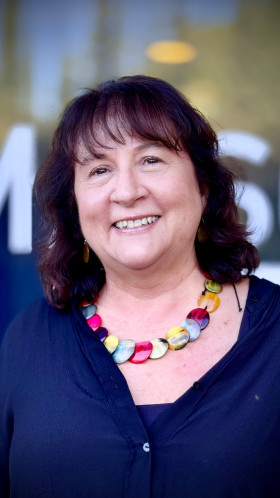
How does biodiversity science inform global policy decisions? At IPBES, this process draws on the expertise of hundreds of researchers around the world. Sandra Luque, a landscape ecologist and research director at INRAE, has been contributing to this international effort for several years.
Published on 23 September 2026

Key takeaways
- Who is Sandra Luque? Sandra Luque is an ecologist and research director at INRAE. She contributes her expertise to IPBES, an independent intergovernmental platform that provides governments with evidence to help protect biodiversity.
- Why is biodiversity under threat? 30 times more public and private financial resources are directed towards activities that harm nature than towards protecting it.
- What do experts working on international assessments do? They assess the available evidence to establish the main scientific findings on biodiversity, helping to inform negotiations and public policy.
Last February, more than 150 members approved IPBES’s first assessment report on business and biodiversity, entitled “The Impact and Dependence of Business on Biodiversity and Nature’s Contributions to People”. The report shows that global financial flows that harm nature—notably environmentally damaging public subsidies and private investment in sectors that put significant pressure on biodiversity—amount to $7,300 billion a year, while only $220 billion is channelled towards conservation and restoration. This means that 30 times more financial resources are directed towards activities that harm nature than towards protecting it. Behind these figures lie years of scientific work by hundreds of experts, who analysed and synthesised thousands of studies alongside their own research.
Sandra Luque joined this international initiative following the Nagoya conference in 2010, where she became aware of the limits of research in shaping international negotiations. Having led several European projects, she hoped her findings would feed more effectively into discussions and decisions. “Despite our efforts to make a difference, however, we saw little tangible change, which convinced us that we needed to get more directly involved”.
Why IPBES?
This period marks a turning point in the relationship between science and policy on biodiversity. The world had failed to meet its 2010 targets for halting biodiversity loss. A few months before the Nagoya conference, governments meeting in Busan, South Korea, had already recognised the need to better connect scientific knowledge with public decision-making and agreed in principle to establish an intergovernmental platform dedicated to biodiversity and ecosystem services.
In Nagoya, member states welcomed the proposal and encouraged its implementation. Two years later, in April 2012, IPBES was officially established in Panama as an independent intergovernmental platform.
“This intergovernmental body helps identify policy-relevant tools and methodologies and promote their use by governments”, Sandra Luque explains. The platform brings together experts who assess the state of scientific knowledge on biodiversity and prepare a summary for policymakers, which is then adopted by representatives of the member states.
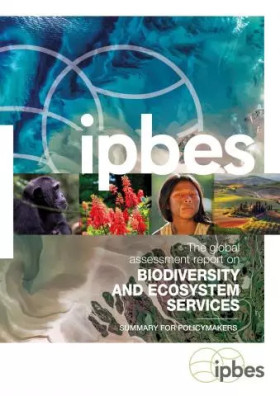
This approach makes IPBES assessment reports particularly influential in the public debate. Its first global assessment, published in 2019, marked a turning point by estimating that 1 million animal and plant species were threatened with extinction. “This report provided figures, and that is what politicians want—numbers that show where we stand and why we are talking about a crisis,” says Sandra Luque. Presented to more than 130 delegations, the assessment received widespread international attention. For Sandra Luque, it was a particularly significant moment: for the first time, heads of state from several countries—including France—referred publicly to the findings and figures from the assessment.
This work subsequently informed the negotiations that led, three years later, to the adoption of the Kunming–Montreal Global Biodiversity Framework, which sets quantified biodiversity targets: protecting 30 per cent of land and seas and restoring 30 per cent of degraded ecosystems by 2030.
Biodiversity decline in numbers
- Worldwide. According to IPBES (2019), around 1 million species face extinction, at a rate tens to hundreds of times higher than the average rate seen over the last 10 million years. Nearly 75 per cent of terrestrial habitats and 66 per cent of marine habitats have been profoundly altered by human activities.
The five main pressures are changes in land and marine use, overexploitation of resources, climate change, pollution and invasive alien species. These figures are now being updated for the new IPBES global report, which is under preparation.
- In France. The National Red List identifies 2,903 endangered species among the 17,367 assessed, or 16.7 per cent—nearly one in six. It also lists 189 species that have disappeared from France, some of which are now extinct worldwide. With its overseas territories, home to particularly rich and often endemic biodiversity, France bears significant responsibility for conserving many globally threatened species.
Measuring biodiversity to track commitments
Verifying whether these commitments are being met remains a challenge, as biodiversity monitoring systems are fragmented and vary depending on the region and the issues at stake. IPBES not only assesses the state of biodiversity, as in its 2019 report, but also evaluates the methods used to measure it. This is the aim of the Monitoring Assessment, conducted over several years by dozens of experts: to catalogue available data, methods and infrastructure, and identify what is still needed to monitor the state of biodiversity, the causes of its changes and its benefits to human populations (food production, energy, air and water quality, crop pollination, climate regulation, etc.). Its conclusions will be used to measure progress towards the Global Biodiversity Framework targets and inform the next IPBES Global Assessment of the State of the Living World, due in 2028, which will update the findings from 2019.
Sandra Luque is one of the authors of Chapter 3 of this assessment, where she focuses in particular on observation systems and monitoring infrastructure. She is responsible for the section on Earth observation systems, in which satellite observation plays a central role. “The growing range of sensors and satellites now makes it possible to monitor biodiversity much more accurately, particularly over time. We can no longer do without the technologies developed by space agencies."
Satellite observation: INRAE expertise supporting two international initiatives
- One Forest Vision combines satellite observations, field data and artificial intelligence to better monitor tropical forests, their biodiversity and carbon stocks in major tropical basins.
- One Water Vision also relies on Earth observation to improve the monitoring of water resources and early warning systems for droughts and floods. INRAE hosts the secretariat of the international research consortium associated with the initiative.
This approach does, however, have two limitations. Firstly, satellites do not measure biodiversity directly; rather, they enable us to assess its state through signals detected, as an example, from vegetation—a challenge Sandra Luque has worked on for 40 years, more recently, through her contribution to defining some of the Essential Biodiversity Variables (EBVs), a framework advocated by GEO BON, the global network of researchers coordinating biodiversity monitoring internationally. Secondly, without in situ surveys, these signals cannot be calibrated or validated, creating a paradox: just as satellites are at their most powerful, the field surveys needed to validate them are becoming increasingly rare due to a lack of funding. As Sandra Luque points out, “resources for forest and botanical surveys are becoming increasingly scarce, raising the question of how researchers can make do with what remains”.
A pilot project in Costa Rica
Sandra Luque also addresses these issues daily in her own research. Under her leadership, a project developed at INRAE’s Land, Environment, Remote Sensing and Spatial Information joint research unit (TETIS) in Montpellier, supported by CNES, is exploring the potential of this approach in tropical forests, with Costa Rica serving as a country-wide pilot. These forests are home to exceptional biodiversity and face growing human pressures—deforestation, land-use change and fragmentation—but remain difficult to map due to a lack of field surveys. Yet their conservation lies at the heart of the Convention on Biological Diversity’s objectives. She stresses the urgency of restoration, pointing out that “we need to know what, where and how. If we don’t plant the right species, it’s all for nothing.”
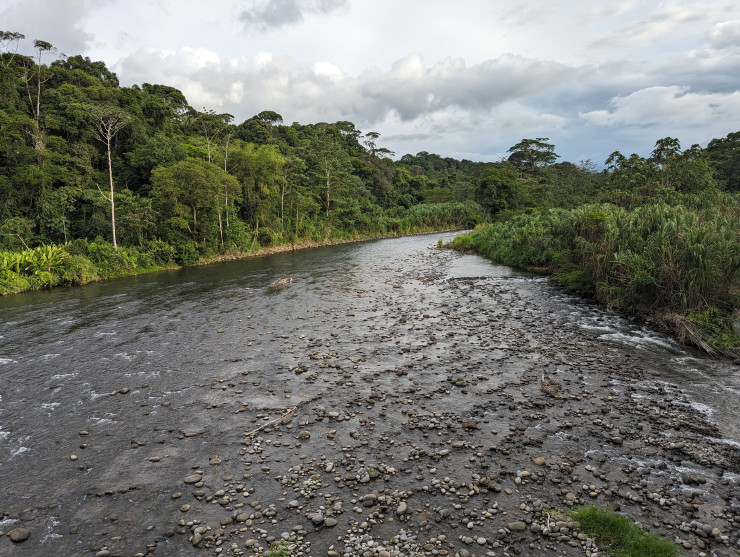
Supported by CNES and linked to the work of CEOS, the project integrates three types of imagery within a Data Cube: optical imagery to identify vegetation cover, hyperspectral imagery to distinguish the unique signatures of different types of vegetation, and radar imagery to measure the vertical structure of forests despite cloud cover. Together, these enable us to characterise the composition, functioning and ecological integrity of forest stands—in particular secondary forests, which now make up the majority of tropical forests—with the aim of measuring their actual contribution to biodiversity and landscape resilience.
This project is being carried out in collaboration with Costa Rican institutions, notably as part of Maïri Souza Oliveira’s PhD research. An initial study published in Ecology and Evolution, in collaboration with CIRAD, combined field data on nearly 500 tree species with freely available Sentinel-2 imagery to automatically map the country’s forest types. The aim was to produce spatial indicators—useful for both research and forest management—to inform conservation and restoration priorities and assess the coverage of protected areas.
Bringing international research communities together
These questions also shape Sandra Luque’s involvement in international scientific networks. She co-organised the IUFRO 2026 conference in Coyhaique, in Chilean Patagonia, the southernmost edition held to date. As chair of the scientific committee, she helped shape the programme and select the research presented. She also convened two sessions designed to bring together research communities that rarely interact: one on remote sensing for forest monitoring, and the other on the Nexus approach, which examines the interactions and trade-offs between biodiversity, climate, food, water and health.
Building expertise, preserving scientific independence
At IPBES, the key challenge is precisely to compare these observations over time and across regions. By providing repeated, spatially explicit and comparable observations at different scales, Earth observation systems enable us to move from scattered data to a dynamic, spatial view of biodiversity and how it is changing. This is essential for developing indicators that are consistent over time and across regions, and for monitoring progress towards international conservation targets. The scientific evidence must then be synthesised before being submitted for intergovernmental validation—the most delicate stage of the process—which underpins IPBES’s legitimacy while also exposing it to political pressures.
The experts’ independence provides a safeguard against these pressures. Nominated at national level, they are then selected by the IPBES Multidisciplinary Expert Panel (MEP) solely on the basis of their expertise. They serve in their own capacity, rather than as representatives of their countries. “This allows our American colleagues to continue to make their voices heard amid widespread attacks on biodiversity. Similarly, it allows Argentine researchers to speak out in a context where laws are being passed to exploit resources—particularly water—without restraint”. At a time when several states are withdrawing from multilateral bodies, this scientific independence is essential to maintaining a common scientific voice.
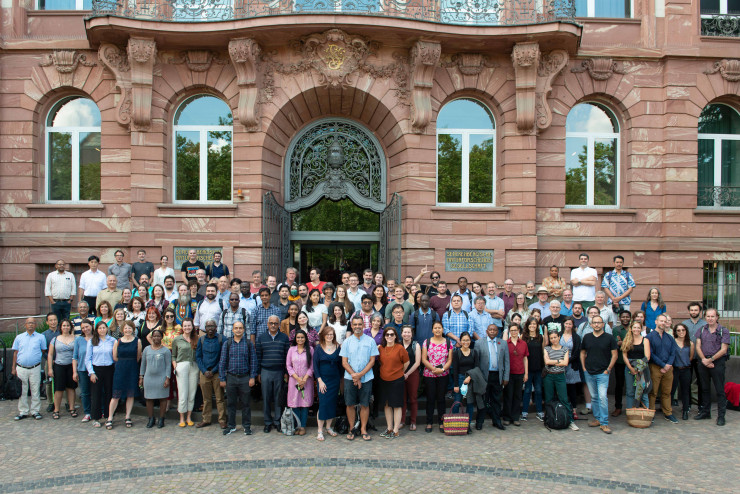
As with climate change and the IPCC, several IPBES colleagues take part in national delegations at biodiversity COPs, where they are expected to provide figures and compelling evidence to support discussions and make a convincing case, helping governments to reverse current trends. The private sector must also recognise what is at stake, Luque insists. “We cannot continue to make profits, particularly in agriculture, without taking biodiversity into account. If we destroy everything, everyone stands to lose,” warns the researcher, who hopes that, step by step, we can continue to restore our forests, lakes and natural environments.
INRAE and biodiversity
Biodiversity is one of INRAE’s key research areas. Its teams work on agroecosystems, forests, aquatic environments and overseas territories to better understand the effects of global change and develop solutions for conservation and restoration.
- As part of the INRAE 2030 strategy, several research and innovation challenges directly address these issues, notably genetic resources, water management and forest adaptation.
- The institute draws on several research infrastructures, including Data Terra and AnaEE-France, and coordinates InSylva France. It will also coordinate IN-SYLVA Europe, a future European infrastructure dedicated to studying how forests adapt to global change. INRAE is also a founding member of the Foundation for Biodiversity Research (FRB).
Sandra Luque’s career
Sandra Luque, research director at INRAE (Land, Environment, Remote Sensing and Spatial Information joint research unit -TETIS – in Montpellier), is a landscape ecologist specialising in the integration of field observations and Earth observation data to understand and monitor changes in biodiversity and ecosystems. Her work lies at the interface between theoretical and empirical research. After training in the United States (Master’s and PhD at Rutgers University, with a NASA scholarship), she moved to France in 2005, joining Cemagref in Grenoble—later IRSTEA and then INRAE—where she was appointed research director in 2007, following research positions in Cambridge (United Kingdom) and Finland. She was also a visiting scholar at the University of St Andrews from 2013 to 2016. She served as Vice-President of the International Association for Landscape Ecology (IALE) from 2005 to 2013 and as a member of the Board of Directors of INTECOL (International Association for Ecology) from 2018 to 2022, where she chaired the Science Committee. From 2017 to 2024, she coordinated IUFRO’s Forest Environment Division.
She is also involved in international efforts to harness Earth observation for biodiversity. On behalf of CNES, she represents France on the Committee on Earth Observation Satellites (CEOS), where she contributes in particular to the Biodiversity Virtual Constellation (B-VC), an initiative aimed at strengthening the coordinated use of Earth observation for biodiversity monitoring.
In 2026, Sandra Luque was elected to the IPBES Multidisciplinary Expert Panel (MEP) as an alternate representative for the Western European and Others Group (WEOG).