

Ressources dossier
Society and regional strategiesRole of research in agricultural education programmes
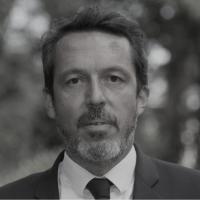
Interview with Benoît Bonaimé, Director General of Education and Research (DGER) at the French Ministry of Agriculture and Food Sovereignty
Published on 23 July 2026

Below, Benoît Bonaimé reflects on the current state of agricultural education programmes in France and the role to be played by research.
What expectations does the DGER have for research when it comes to basic training programmes?
Farming practices are changing rapidly and, in tandem, agricultural professionals are facing growing challenges. Thus, climate change demands that we utilise new tools, skills, and knowledge.
Our 200 training programmes are updated every 5 years, which provides a regular opportunity to refresh their content following in-depth exchanges with educators, agricultural professionals, and scientists. Scientists make an essential contribution by identifying the skills and techniques we need in the present day and beyond.
Researchers and associate professors also have a crucial role to play in facilitating the transmission of new discoveries to educators.
To this end, our ministry is creating a system whereby our pedagogic teams can easily reach out to experts, such as scientists and agricultural professionals, so that our agricultural training programmes can integrate new, actionable knowledge.
How can continuing education programmes be improved to better support transitions? What role should research play?
Production systems are experiencing profound changes, and continuing education programmes can serve as essential and powerful sources of support, right alongside basic training. This is the reason we make sure to include research and innovation in our efforts to constantly improve continuing education programmes.
First, DGER catalyses the transfer of knowledge to farmers interested in new, innovative agroecological practices by funding applied and actionable research projects right down to the farm level, notably through technical demonstrations.
Second, the RD-Agri platform centralises and creates value from the results of agricultural R&D projects financed by CASDAR (Compte d'affectation spéciale développement agricole et rural). The platform can be accessed by anyone involved in continuing education programmes.
Since 2018, DGER has been supporting the RIT unit, which is dedicated to research and innovation transfer. RIT was launched by ACTA, France’s chambers of agriculture, and INRAE with the objective of speeding up such transfers and the adoption of discoveries by stakeholders in the field, especially discoveries related to issues prioritised by farmers. By increasing the accessibility of all research-based results, advisors can better support farmers.
DGER catalyses the transfer of knowledge to farmers interested in new, innovative agroecological practices.
-
Catherine Foucaud-Scheunemann
author / translated by Jess Pearce
Direction de la communication -
Cécile Détang-Dessendre, Nathalie Hostiou and Laurent Piet (INRAE), François Purseigle (INP Toulouse)
Scientific board