

Ressources dossier
Society and regional strategiesFrance's future farmers
In France, 50% of farmers in the workforce in 2020 will have retired by 2030. Simultaneously, a growing number of new farmers are arriving from outside the agricultural world. Could this sociodemographic shift represent an opportunity to safeguard food sovereignty while also adapting to climate change? An analysis.
Published on 17 July 2026

Who are tomorrow’s farmers?
Farm generational renewal is crucial if we wish to restore and preserve food sovereignty while also transitioning to sustainable, resilient agroecological systems that are adapted to climate change and that preserve biodiversity.
Food sovereignty
The right of populations to choose their own strategies and policies for guaranteeing food security while also considering
the effects on others. Via food choices, agricultural policies, and trade policies, food sovereignty helps safeguard access to healthy and sustainable foods.
When we talk about generational renewal in this issue of Ressources, we do not mean the one-for-one replacement of each retiree. Setting numbers aside, the issue of generational renewal raises broader questions related to gender and socioeconomic representation, training, access to financial resources and land, farm stability, and the subsequent choice of agricultural and food systems. Generational renewal requires attracting new farmers while also ensuring the stability and availability of higher-quality employment.
- 2 new farmers per 3 retired farmers
- 25% of new farmers have no family ties to farming
- 71% of new farmers are younger than 40 years old
Exploring the contrast between fear and hope
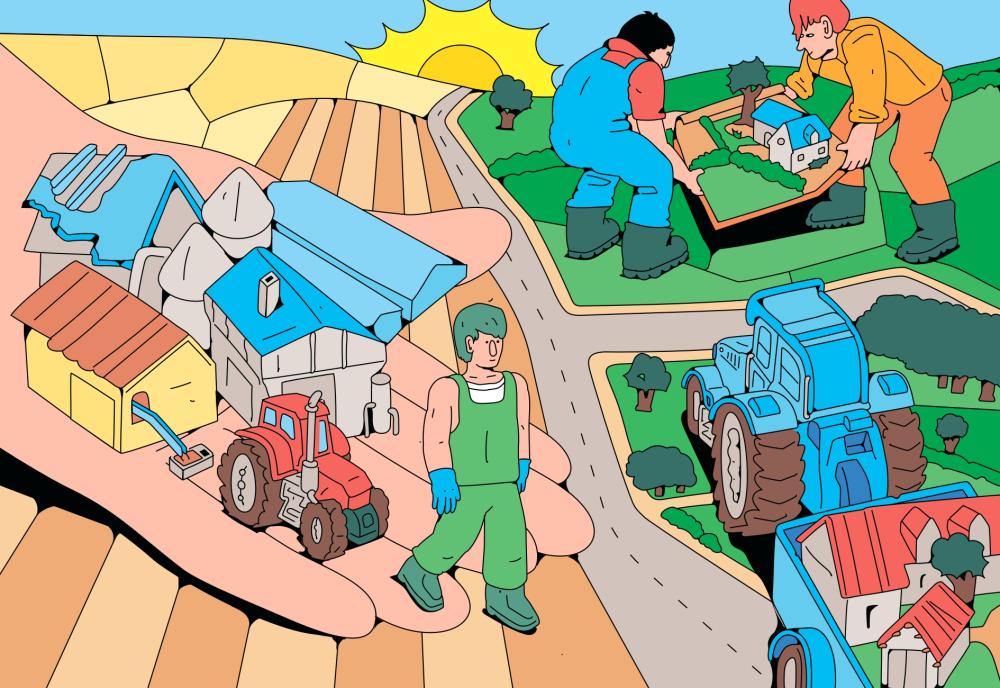
French farmers are clearly concerned about the future: 40%1 of farmers interviewed in late 2023 expressed pessimism about their farm’s future, compared with 34% a year earlier. 40% also said global competition was a major concern, up 10% from the previous year. Concern about climate-related production losses remained consistent (34%) and equal in magnitude to concerns over farm succession. Their final key concern centred on financial difficulties (30%; +5% compared to the previous year).
In its 2023 report on generational renewal across European Union (EU) farms, the European Parliament noted that "the price and availability of land, the generally low profitability of agricultural activities, administrative requirements, and the image of the sector were identified as the main barriers to becoming a farmer." It also underscored that, "other factors, such as a lack of own capital, difficult access to credit, to technical services and to support measures [...] can also constitute important barriers to the involvement of young and new farmers in the agricultural sector."
Although farmers often express that they feel unappreciated, 75% of the French population thinks highly of farmers, whom they see as playing a major role in supplying food (85%) and preserving biodiversity (77%)2. However, only 20% of farmers would recommend that their children become farmers, even though 67% believe that, in the future, there will not be enough farmers to feed the population.
Many people are nonetheless interested in becoming farmers: in the fall of 2024, vocational schools and universities providing agricultural training welcomed 215,070 students into secondary- to tertiary-level programmes (e.g., engineering and veterinary degrees). This figure represents an increase of 12,000 students over 5 years, "a rise that has not been seen for 10 years," according to the French Ministry of Agriculture and Food Sovereignty. Consequently, the rate at which people are becoming farming professionals is also climbing: 87% have earned a vocational baccalaureate (+5%), and 90% have earned a two-year technical degree in agriculture (BTSA, +2%). People are also successfully passing their professional exams (87.6%). France’s second largest employment sector comprises the industries of farming, agrifood, landscaping, forestry, aquaculture, and fishing. Together, these industries account for 3.4 million jobs, of which 1.2 million are in farming. Job availability is increasing across the board, and all skill levels are needed. According to a study by France Stratégie3, 100,000 jobs will need to be filled between now and 2030. There is clearly an urgent need for research-driven solutions, support, recommendations, and training within this changing landscape.
Sociodemographic shifts
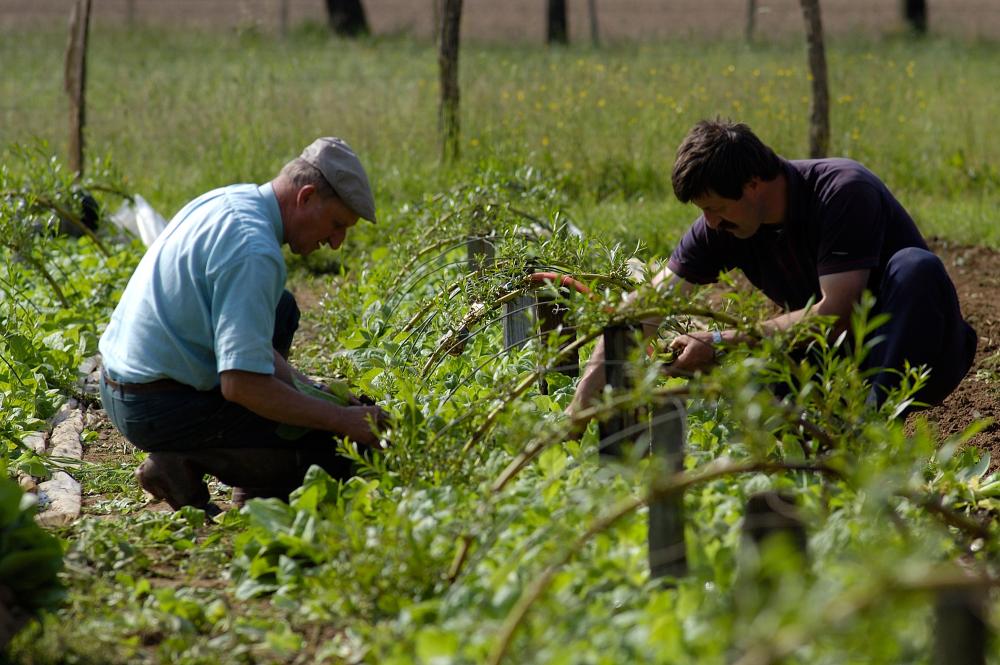
The agricultural workforce is shrinking. In 2020, 758,300 people (1.5% of the workforce) were permanently employed on farms in mainland France. Within this population, the number of farmers, joint farmers, and permanently employed family members fell sharply between 2010 and 2020 (-16.5% FTE4). The number of salaried workers coming from outside the family increased between 2010 and 2020, particularly those hired on permanent contracts (+8.2% in FTE). Thus, it seems more appropriate to talk about workforce renewal than generational renewal in the context of farming.
That said, most of time, farms are operated by individuals who own the land or control the means of production and who retain power over management and decision-making. The number of individual farms (58.4% of all farms in 2020) has been falling (-33% between 2010 and 2020 compared to -20% for all farms). We are witnessing the emergence of new ways of structuring farms and farm labour. The number of farms organised as corporations (with one or more associates) is climbing (+9%). Such farms account for around two-thirds of usable agricultural area (UAA) and two-thirds of the total agricultural workforce. They represent the majority of medium to large farms (70%) but are rare among small or micro farms (17%).
Large farms increased in number between 2010 and 2020 (+3.4%) and now represent 20% of all farms. In contrast, micro farms (< 30% of all farms at present) are declining fastest in numbers compared to farms in other size categories (-31% between 2010 and 2020).
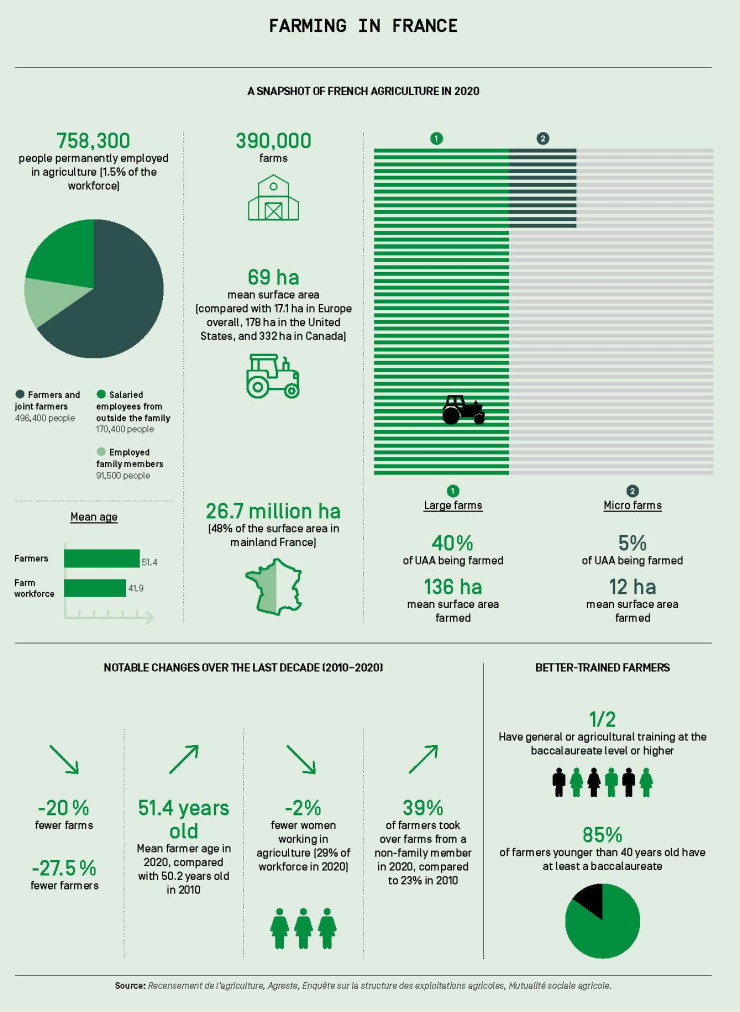
From the perspective of production systems, the number of livestock farms fell by 30% between 2010 and 2020, while the number of crop farms declined only somewhat (-9%), and vegetable farms and horticultural farms became slightly more abundant (+1%). Since the mid 20th century, there has been an increase in farm density and degree of specialisation5. In the 1950s, most farms had mixed crop-livestock systems; in 2020, only 10% did. Major production basins have emerged: cash crop farming in the Paris Basin; industrial crops in northern France; dairy cattle farming in northwestern France, the Jura Arc, and the country’s alpine valleys; and suckler cattle farming in the Limousin and Charolais regions.
In 2022, 71% of new farmers were younger than 40 years old. Most structure their farms as corporations, commonly as GAECs (Groupements Agricoles d'Exploitation en Commun).
Farms are no longer exclusively a family affair. Indeed, in 2020, 25% of new farmers took over a farm to which they had no familial connection. These new farmers are often better trained: 65% have at least a general or agricultural baccalaureate, a figure that is 52% for farmers who have taken over a family farm.
standard gross production (SGP)
This descriptor is used to classify farms according to their potential production value in euros.
The categories are as follows:
Micro: SGP < €25,000
Small: SGP from €25,000 to €100,000
Medium: SGP from €100,000 to €250,000
Large: SGP > €250,000
(Source: INSEE)
Agriculture in France’s overseas territories
In 2020, there were 26,600 farms covering 126,000 ha in France's overseas territories. Like mainland France, they are experiencing a decline in farm numbers, with the exception of French Guiana.
The vast majority of farms (93%) are small or micro in size. Around a quarter have mixed crop-livestock systems (26%). There are 18,698 farmers. Around 1/3 are women. The greying of farmers is more pronounced than in mainland France: their mean age was about 53 years old in 2020, compared to 49 years old in 2010. However, 46% of farmers over 60 years old have no immediate plans to retire. When a farm is fully or partially taken over, the process most often involves a family member (up to 41% of the time on Réunion Island). It is rare for a farm to be taken over by someone from outside the farmer’s or joint farmer’s family. Also rare is a farm’s disappearance due to an expansion project or a conversion to non-agricultural usage.
Farming as a profession
"You are not born a farmer, you become one," stated a 2023 Senate report6. Although farmers tend to remain in the profession until retirement, much more so than individuals with other occupations, more and more are leaving the industry. In 2015, 3.2% of farmers between the ages of 25 and 55 left the profession, a slight increase compared to in previous years (2.1–2.4%). These farmers more frequently run smaller-than-average farms and tend to have multiple jobs. Those running corporate farms, including members of GAECs, are less likely to leave the profession7. The farmers most likely to leave are those who are specialised (e.g., in vegetable farming, horticulture, arboriculture, but not in viticulture) and those who run less capital-intensive livestock operations (sheep and goats, poultry, beekeeping, or other small animals). What are the reasons behind this trend? There are several intertwined causes: economic and financial difficulties, health issues, changes in the farmers’ social environment (diversification of operations, development of salaried employment), and economic conditions. Farming is not always a full-time job. In 2020, farming was part-time work for nearly one third of farmers and permanent employees who were not family members as well as for two thirds of the farmers’ family members.
Increasingly, farmers have a second profession (20%; up by 1.4% compared to 2019). At present, farming is seen more as a job than a lifelong endeavor. The fact is that farming is complex and demanding: it means coordinating agricultural production, managing human and material resources, marketing products, and handling various administrative and financial requirements. Furthermore, revenue varies depending on the production system, year, climatic conditions, and product prices, among other factors.
The future of French farming
Will we continue to see a decline in the number of French farms? It is estimated that, in 2035, 274,600 farms will remain in mainland France, which represents a mean annual decline of 2.3%8. It is predicted that the number of individual farms will fall sharply (-50% between 2020 and 2035) and that corporate farms will become the most common farm type (59%, compared with 42% in 2020 and 31% in 2010).
There are likely to be fewer farmers and more salaried farm workers. This hypothesis is supported by data from Mutualité Sociale Agricole, which show that, between 2021 and 2022, employment on farms in mainland France (measured in FTEs) increased by 1.2%. This increase is attributable to a rise in salaried employment: +10.6% in FTEs associated with seasonal or occasional employment and +8.8% in FTEs associated with services provided by external contractors. The trend appears to be the same for 2022–2023.
Who will tomorrow's farmers be? At present, students in agricultural training programmes come from an increasingly wide range of socioeconomic backgrounds. In 1990, 40% of such students were the children of farmers or salaried farm workers. In 2023, this figure was 9%.
A pattern across Europe
France is not alone in what it is experiencing. Between 2010 and 2020, Europe lost 3 million, or 25%, of its farms; these losses occurred mainly in Eastern Europe (e.g., 1 million farms in Romania) and the Mediterranean basin (Italy, Greece, and Croatia). However, the total surface area dedicated to agricultural production remained relatively consistent during that same period (-2.2%) because farms disappeared due to takeovers and mergers. It was largely smaller farms (> 5 ha) that were lost, while much larger farms (> 100 ha) increased in number (+13.9%).
State of EU agriculture in 2020
- 8.7 million individuals in the farming workforce
- 57 years old mean farmer age
- 9.1 million farms
- 157.4 million ha (38.4% of EU land surface)
- 17.1 ha: mean farm surface area
- 4.2%: percentage of the workforce employed in agriculture in 2020 (vs. 5.6% in 2010)
Source: Key figures on the European food chain, 2023.
In 2020, one third of farmers were 65 years old or older. This percentage was higher in certain EU countries, including Portugal, Cyprus, and Spain. Conversely, 11.9% of farmers were younger than 40 years old, a percentage that was higher in Austria (around 25%) and Poland (20%). Nearly three quarters of farmers possessed solely practical experience. Only 10% of farmers had formal agricultural training beyond the baccalaureate; for the other 90%, their agricultural education ended in secondary school. By 2040, farmers in Europe are likely to come from increasingly diverse backgrounds, given the advent of new technologies and the increasing importance of social values (e.g., urban agriculture, community food supplies)9.
1. Étude barométrique PRISM2024.
2. Enquête Ifop pour Ouest-France, 2023.
3. url.inrae.fr/3Dq6FA1
4. Full-time equivalent.
5. url.inrae.fr/3P4TBCv
6. url.inrae.fr/3DoOomC
7. ASP (2016). Départs précoces en agriculture – Analyse d’une situation peu connue. Les études de l’ASP. 24 pages.
8. Lafont F. et al. (2024). In Barry C, Fresson-Martinez C, Le Blond I (coord.). Transforations de l’agriculture et des consommations alimentaires. Insee Références, 2024, 23–24.
9. European Commission, Joint Research Centre, Bock A et al. (2021). Farmers of the future, Publications Office. url.inrae.fr/4a42aXU
To preserve France's agricultural and food sovereignty, farming must be supported in its efforts to renew its workforce and navigate the transitions forced upon society by climate change and other environmental crises.
-
Catherine Foucaud-Scheunemann
author / translated by Jess Pearce
Communication head office -
Cécile Détang-Dessendre, Nathalie Hostiou and Laurent Piet (INRAE), François Purseigle (INP Toulouse)
Scientific board