

Agroecology Reading time 3 min
Trichogramma: an effective biocontrol solution for the corn borer
What began as a scientific breakthrough at INRAE’s Antibes centre in the 1970s has evolved into a practical solution for controlling the corn borer, thanks to decades of research on Trichogramma wasps. A study tracing the impact of this work reveals a trajectory that extends far beyond the realm of research. Scientific innovation, the emergence of an industrial sector, a reduction in pesticide use and changes in agricultural practices all bear witness to the far-reaching impact of this tiny insect—an ally of crops.
Published on 01 July 2026

With a wingspan of a few centimetres, Ostrinia nubilalis—the European corn borer—remains the main pest affecting maize crops in France. Its larvae feed on the leaves before boring into the stalks, where they create tunnels that weaken the plants and reduce yields. They also favour the growth of fungi capable of producing mycotoxins, making the grain unfit for sale. Until the 1990s, control of this pest relied primarily on chemical insecticides.
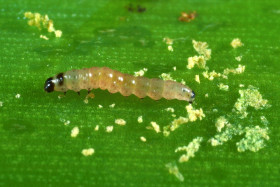
In response to these challenges, research began as early as 1973 at INRA’s Zoology and Biological Control Laboratory in Antibes—now part of the Sophia Agrobiotech Institute in Sophia Antipolis. A case study using INRAE’s ASIRPA* methodology shows how the effects of this work have extended far beyond the scientific sphere.
Building on this work, the researchers developed a biocontrol strategy using Trichogramma brassicae, a tiny insect that attacks the eggs of the European corn borer, preventing its development. This work led to major advances in our understanding of Trichogramma species diversity, industrial rearing methods and risk prediction tools, as well as to the development of patent-protected innovations.
Economic and societal impact
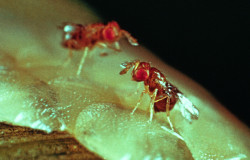
The partnership established in 1977 between INRA and UNCAA, the National Union of Supply Co-operatives, helped transform scientific findings into practical solutions and led to the creation of BIOTOP in 1991, which later became Bioline Agrosciences—Europe’s first industrial producer of Trichogramma wasps. This momentum helped drive the development of a fully-fledged sector centred on biocontrol.
Today, around 120,000 hectares of maize are protected each year in France using this method. It helps reduce pesticide use and the associated risks to the environment and non-target organisms, while also making fieldwork safer and easier for farmers. Now a reference point for policies aimed at reducing the use of plant protection products, this success illustrates the ability of public research to deliver practical solutions to agricultural and environmental challenges.
*The ASIRPA methodology analyses the socio-economic impacts of agricultural research
Reference: Christine Douchez, Nicolas Ris, Cécilia Multeau, Jacques Frandon. Lutte biologique contre la pyrale du maïs : efficacité et succès des trichogrammes. INRAE. 2026, pp.28. ⟨hal-05662275⟩