

International Year of Pastoralism: INRAE’s research
The UN declared 2026 The International Year of Rangelands and Pastoralists (https://www.fao.org/rangelands-pastoralists-2026/en), with the aim of raising awareness of pastoralism, a form of livestock farming that is widespread throughout the world but underrepresented in research and public policy.
Favouring a multidisciplinary approach, INRAE contributes to research on pastoralism both in France and internationally.

What is pastoralism?
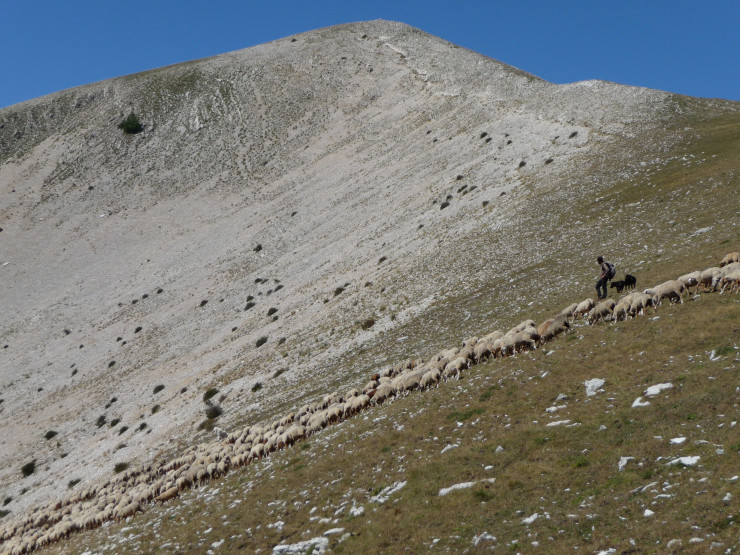
Pastoralism refers to a variety of forms of livestock farming that rely on the use of natural resources for grazing, such as natural grasslands, rangelands, alpine pastures, and woodlands, among others. It is organised seasonally, taking into account the natural environments in which the herds live, and involves moving the animals through natural or minimally developed landscapes.
Pastoralism, present on more than a third of the planet's land surface, is closely linked to sustainable land management, biodiversity, strong cultural traditions, and the livelihoods of millions of people. In France, pastoralism accounts for around 22% of the country's livestock, covering 2.2 million hectares, mainly in southern mountain ranges — the Alps, the Massif Central, the Pyrenees and Corsica — where it takes various forms depending on the territory and livestock species. In France, pastoralism is most often practised by combining areas of natural vegetation and cultivated land, an activity known as agropastoralism.
An agroecological farming method
‘Pastoralism can be described as an agroecological farming method: it relies on natural grazing resources and livestock mobility, which reduces the need for external inputs. While herds do consume resources, they also contribute to their renewal and help maintain environmental balance and biodiversity. This farming method also depends on the diversity of land types and vegetation. Moreover, it is highly sensitive to climatic hazards and involves interactions with wildlife—factors that form part of the distinctive balance of agroecological systems,’ explains Benoît Dedieu, Research Director at INRAE, specialising in livestock farming and pastoral systems.
Main challenges
- Pastoralism is a form of food production often associated with quality labels, and a vital tool for managing ecologically rich environments. It is equally a technical and social system shaped by distinctive ways of life rooted in close relationships with animals, nature, and territory.
- It plays a key role in environmental sustainability. Pastoralism makes use of areas that are difficult to cultivate, thereby contributing to the preservation of biodiversity, limiting land abandonment, and preventing natural hazards such as fires in exposed areas.
- Although intrinsically linked to climate variability, pastoralism is also directly affected by climate change. Increasing droughts and water scarcity are destabilising pastoral systems in both mountainous and arid regions.
- Lastly, pastoralism is a social and territorial issue. It provides livelihoods for millions of people around the world, is based on a diversity of cultures and practices, sustains often isolated territories, and involves coexistence with other land uses (tourism, nature conservation, infrastructure), which can sometimes be a source of tension but also of collective innovation.
INRAE research on pastoralism
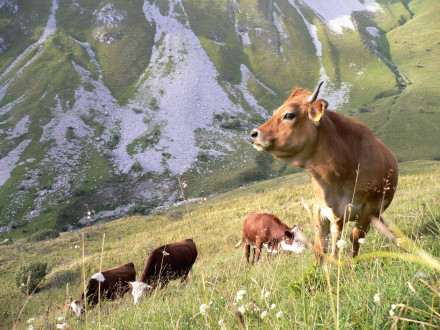
‘The innovative nature of INRAE’s work lies in the diversity of disciplines used to understand pastoralism in all its dimensions,’ emphasises Benoît Dedieu. The institute's expertise relies on research into livestock farming and socio-ecological systems conducted in the fields of ecology, animal husbandry, economics, sociology and geography.
These approaches are firmly interdisciplinary and adaptable to a wide range of institutional contexts. They were mobilised during the preparatory work for COP17 on biodiversity loss, with INRAE contributing alongside the French Committee on Desertification, which was responsible for preparing France’s official position. They have also been used to address questions raised by members of Parliament and the Senate. At the same time, there is strong demand for collaboration from livestock farming technical services.
Pastoralism, a key issue at COP17 on desertification
Livestock mobility does not degrade land, it helps maintain it. This is what research on pastoralism shows, in support of the three major challenges in the fight against desertification: soil restoration, adaptation to climate change, and biodiversity conservation.
On the occasion of COP17 (17-28 August 2026, Ulaanbaatar, Mongolia) on combating desertification, the French Scientific Committee on Desertification (CSFD) is publishing analyses and recommendations, co-authored with INRAE scientists:
- Sustainable pastoralism, essential to the fight against desertification (with Benoît Dedieu): mobility and the collective management of rangelands as levers for preserving land, rather than as a constraint to be corrected
- Soil health and pastoralism (with Alexia Stokes): how healthy soils, maintained through grazing, support more resilient food systems.
- Science as common ground in an era of disruption (with Alexia Stokes): the role of international scientific cooperation in building trust between countries on desertification issues.
What areas does INRAE’s research focus on?
- Resources dynamics: Vegetation dynamics (alpine pastures, Mediterranean rangelands), the role of grazing in biodiversity, prevention of land abandonment and fires. For ecologists, animals are ‘disruptive’ elements that affect the functioning of ecosystems. Food consumption, trampling and manure play a fundamental role in restoring the ecological balance, thus promoting biodiversity.
- Adaptation to climate change: Facing droughts, extreme weather and growing tensions over access to water, particularly in mountainous areas, which are leading to the adaptation and transformation of pastoral practices.
- Animals in rangelands: Evaluating changes in body condition and productive performance, health and welfare in open grazing systems, interactions with wildlife, and the behavioural and cognitive capacities that enable animals to exploit spatially and temporally variable plant resources.
Wolves as predators: a sensitive topic addressed by research
Among the interactions with wildlife, the issue of predators, particularly wolves, is of particular concern. INRAE and its partners, notably through the Coadapht network, are conducting research to monitor processes of co-adaptation between livestock farmers and large predators; to analyse ongoing transformations in livestock systems; and to assess the effectiveness of herd protection measures. This work aims to inform public debate in a context of heightened tensions among stakeholders, while addressing both the operational realities of pastoralism and the imperatives of biodiversity conservation.
- Livestock farming systems and their trajectories: Analysing the dynamics of pastoral retreat and redeployment, assessing their implications for food autonomy, dependence on external inputs, capacity to diversify and market livestock products, and the contribution of pastoral systems to agroecological transitions
- Occupations and territories: Examining the organisation of pastoral work, labour conditions, vocational training and knowledge transmission, the attractiveness of pastoral professions, and interactions with other land uses (tourism, conservation and local authorities).
Local breeds, production and adaptation to difficult conditions: research conducted in collaboration with TSARA's African partners
The TSARA initiative, of which INRAE is a member, brings together 36 institutions—including 30 based in Africa—and spans all of the continent’s major pastoral regions. Maghreb, Sahel, East Africa (including Ethiopia) and Southern Africa. There are many different forms of transhumance in these regions, all of which are affected by drought, a lack of interest in the profession among young people and an absence of support from public policies.
Together with partners in Tunisia and Morocco, INRAE's genetics teams are working to identify breeds that are suited to the specific conditions of Maghreb grazing lands and to the food needs of these regions. However, the debate on the future of local breeds requires the participation of researchers from across the continent in webinars, and the use of a multidisciplinary approach (see website).
In pastoralism, there are many local breeds that are not necessarily “productive”, explains Benoît Dedieu, but that are able to withstand very difficult conditions such as heat, lack of water and indigestible vegetation, and to travel long distances to find food.
In addition to contributing to the adaptation of pastoral systems to climate change, this research also addresses a risk present in both Africa and France: ‘the gradual loss of local breeds as a result of crossbreeding policies that favour more productive breeds.
To analyse long-term pastoral trajectories, INRAE mobilises dedicated observatories such as the Alpages sentinelles network, which documents interannual changes in vegetation, grazing practices and mountain climate dynamics. This network benefits from the political and financial support of the European Union.


A networked approach
- In 2023, INRAE launched the INRAE–IYRP network, bringing together around forty researchers to mark the International Year of Rangelands and Pastoralists (IYRP). This collective initiative builds on a series of close partnerships, including those established with the Institut de l’Élevage, the education sector, pastoral services and environmental stakeholders (regional and national parks, biodiversity conservatories), particularly within a joint technology unit that brings together researchers and field practitioners from diverse backgrounds to produce knowledge, methods and operational tools, and ultimately to foster dialogue around the future of rangelands and pastoralism.
- At the international level, INRAE and CIRAD work with their African partners through the TSARA initiative, particularly on agricultural and pastoral systems. CIRAD is also a key partner in research on agropastoral systems, notably through the SELMET joint research unit.
Highlights of 2026
The International Year 2026 will be marked by a series of scientific and professional seminars and meetings, held in France and internationally.
Scientific contacts: Marie-Odile Nozières-Petit, Bernard Hubert, Benoît Dedieu, coordinators of INRAE’s research on pastoralism.