

An efficient circular bioeconomy
At a time when renewable carbon sources are replacing fossil carbon to build cleaner energy, chemical and materials sectors, our research sets out to promote value chains and transition guided by an interdisciplinary approach, encompassing technical and social dimensions. Our aim is to enhance the value of agricultural, forest and bioindustrial production, as well as biowaste, while taking into account competition between food and non-food uses, and land use.

- Make effective use of biomass and biotechnologies
- Develop renewable energy in the agricultural and forestry sectors
- Support the economic and social dynamics of the bioeconomy
FOCUS on Research & Innovation challenges
• Contributing to French and European leadership in biotechnologies
The transition of biotechnology to an industrial scale is a key step that artificial intelligence, predictive modelling and digital twins (i.e. digital models that faithfully replicate an object, organism, operation or system as it is used, maintained or operated) can help secure by enabling the design of more efficient, robust and sustainable biological processes.
Objective: accelerate research and development and reduce the costs of developing new bioprocesses, with the help of our pre-industrial biotechnology catalysts.
Target: design a digital twin prototype that will incorporate sensors, analytical tools and algorithms and will be capable of interacting with bioreactors.
• Developing the bioeconomy throughout all French regions
France 2030 programmes coordinated by INRAE
- PEPR B-Best – Biomass, biotechnologies and sustainable technologies (INRAE, IFPEN)
Our metaprogrammes
- BETTER – Bioeconomy for urban areas
A look at
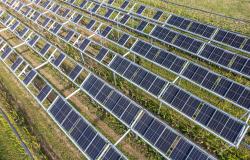
- National Centre for Research, Innovation and Education in Agro-Photovoltaics
As part of the energy transition, the multi-year energy programme is aimed at accelerating the development of the photovoltaic sector.
To meet this demand and pool research resources as well as share the costs and benefits of this research, INRAE has established a National Centre for Research, Innovation and Education in Agri-Photovoltaics (PNR AgriPV). The PNR AgriPV is open to all stakeholders in the sector, including public research and/or educational institutions, private partners and technical and has a national and international remit. - Biomass GIS
The Biomass Scientific Interest Group (GIS) was set up in 2024 and embodies the joint commitment of ADEME, FranceAgriMer, IGN and INRAE to collectively advance research and work on biomass. It aims to consolidate knowledge on biomass, improve tools for monitoring resources and uses, analyse existing research and develop methodological frameworks.


For an efficient and circular use of resources
Driven by the circular bioeconomy, the development of food, energy, chemical and materials sectors that replace fossil carbon with renewable carbon, whilst managing resources – including water and soil – sustainably and minimising their environmental footprint, raises many questions. These concern developing new processes suited to biomass and optimising biomass use (plant breeding and farming practices, innovating processing methods, etc.), They also involve the cascading use of co-products, waste recovery, and the technical and economic aspects of scaling up.
This development concerns all sectors, including agriculture and forestry, with agro-photovoltaics and the use of agricultural and forestry biomass (wood energy, anaerobic digestion, biofuels). It is inextricably linked to major challenges such as reducing greenhouse gas emissions to achieve carbon neutrality by 2050, preserving carbon sinks, and avoiding competition with food and other uses of wood.
Supporting the growth of the bioeconomy
Beyond a shift in resources and technological developments, the bioeconomy also relies on the emergence of new value chains, new markets and new players that combine food and non-food systems.
Our research focuses on the health risks posed by the circulation of biological and chemical contaminants in food and non-food systems. It focuses on understanding the barriers to the transition to the bioeconomy and on analysing and modelling the new market and contractual relationships between stakeholders across sectors and regions. It also involves studying consumer demand dynamics, as well as the role of public policies capable of accelerating the development and sustainable use of biobased products.
More information
Our research theme: Bioeconomy