

Agroecology Reading time 6 min
Can cows detect and remember human emotions?
Anger, joy, a threatening voice or a warm smile: cows appear able to distinguish between different human emotions and subsequently adjust their behaviour according to what they have perceived. These findings shed new light on the relationship between humans and farm animals.
Published on 29 September 2026

Humans are a constant presence in the environment of farm animals, and the way animals perceive us can affect both their welfare and their productivity. Several studies have already shown that dogs and horses are sensitive to human emotions. But what about cows?
Researchers from INRAE’s PRC research unit set out to determine whether cows could distinguish between different human emotions and whether this would influence their subsequent behaviour.
To investigate this, 39 cows watched two 30-second videos. In one, a female experimenter expressed joy; in the other, she expressed anger through facial expressions and vocal cues. The two experimenters were then presented simultaneously to the cows, this time with neutral facial expressions. The researchers observed which woman each animal spontaneously chose to approach and remain near.
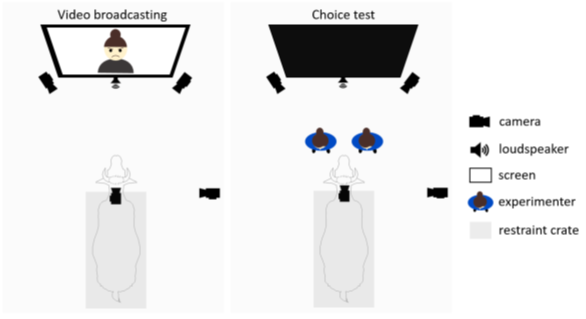
During the video presentations, the cows spent more time looking at the video showing the experimenter expressing anger and showed a preference for viewing it with their left eye. The left eye is mainly connected to the right hemisphere of the brain, which is often associated with the processing of negative emotions and vigilance. The cows also displayed more behaviours indicating a negative response, including avoidance behaviours. These observations suggest that cows are sensitive to human emotional expressions.
During the subsequent choice test, the cows spent more time near the experimenter who had previously expressed joy. Yet at the time of the test, both women remained completely neutral. The animals therefore appeared to have retained an “emotional impression” associated with each person.
This ability is reminiscent of a mechanism involved in our own social interactions. After a pleasant or hostile interaction, we may unconsciously adjust our attitude towards the person concerned. Cows appear capable of a comparable process, at least in a simple form. The researchers see this as an important indication of social-cognitive abilities in cattle.
These findings suggest that cows can interpret human emotional cues, remember them and subsequently act on the basis of this information. This capacity for behavioural choice and adaptation is an important aspect of animal welfare.
A better understanding of animals’ cognitive and emotional abilities is one of the key levers for improving their welfare. While farming standards focus on practices, it is a detailed understanding of what animals perceive, experience and choose that can help bring about meaningful changes.
This study reminds us that communication between humans and farm animals is probably richer and more subtle than we often imagine. Behind a cow’s seemingly placid gaze may lie a sophisticated ability to monitor our emotional cues.
References : Amichaud, O.; Lemarchand, J. ; Cornilleau F., H. B. Ferreira, V. ; Calandreau L. & Lansade L., 2026, Cows react to human emotions displayed in videos and use this information to guide subsequent interaction choices. Scientific Reports,. https://doi.org/10.1038/s41598-026-51623-7