

Transitions via data science, artificial intelligence, and digital technologies
Data science and digital technologies are at the heart of INRAE’s research to explore and understand the diversity and complexity of biological, agricultural, food, environmental, and health systems. They are essential for predicting and anticipating how these systems will evolve. AI is used as a complement to modelling approaches and takes into account the challenges of resource efficiency, transparency, and traceability.

- Develop data acquisition methods and technology
- Exploit data to understand and manage complex systems
- Understand and pilot complex systems with digital twins
FOCUS on Research & Innovation challenges
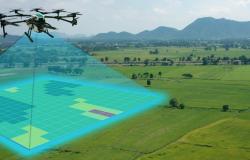
- Use artificial intelligence to accelerate innovation transfer in agriculture
AI is emerging as a key driver in enabling agriculture to meet the major challenges of the future, including the agroecological transition and adaptation to climate change.
Objective: make AI a tool that delivers economic, environmental, social, and agronomic benefits, thereby enhancing the competitiveness and sustainability of agricultural and food systems.
Target: develop tools for farmers (plant disease detection, animal welfare monitoring, etc.), contribute to the establishment of a distributed infrastructure for agricultural data and open-source code, and leverage satellite data at very local scales.
• Accelerate the development of agricultural equipment to support the agroecological transition
France 2030 programmes coordinated by INRAE
- PEPR AE&N – Agroecology and digital technology (INRAE, Inria)
- Farm Robotics grand challenge
Our metaprogrammes
- DIGIT-BIO: Digital Biology to Explore and Predict Living Organisms
Our research infrastructures
- IBISBA: Industrial Biotechnology and Biomanufacturing
- DataTerra: Research Infrastructure, Data and Knowledge, for an integrated observation of the Earth System and the environment
- IN-SYLVA France: adaptation of forests to global changes and silvicultural innovation
- BioinfOmics: Bioinformatics for omics
- DINAMIS: French Institutional Facility for Shared Access to Satellite Imagery
Strengthening multi-stakeholder international cooperation for the ecological transition
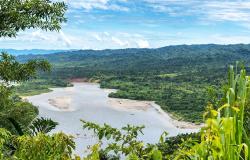
- The One Water Vision initiative aims to develop innovative tools to monitor and manage water resources, strengthen early warning systems for droughts and floods, and provide reliable data to local decision-makers and users. It brings together an international research consortium—including INRAE—with the goal of contributing to global food security and the conservation of water resources.
- The One Forest Vision initiative aims to map and measure biodiversity and carbon reserves in the forest basins of the Amazon, Africa, and Asia using remote sensing data and artificial intelligence. This initiative was pioneered by six major French research organizations, including INRAE, and is being developed in collaboration with research institutions in partner countries.


Data science and digital technologies to support transitions
Advances in digital science and technology are opening up new avenues for exploring complexity
The transitions currently underway require us to address agricultural, food, environmental, and health systems in all their diversity, taking into account the multiplicity of scales (spatial, temporal, and organizational), the interactions among stakeholders, and the often unpredictable nature of their dynamics. Progress in data science and digital technology is opening up new ways to explore this complexity. Artificial intelligence is further accelerating these advances, expanding capabilities for exploring, modelling, and innovating. Alongside analytical, observational, and experimental approaches, in silico approaches (modelling and simulation, computational statistics, and artificial intelligence) are becoming essential for understanding, designing, and managing systems of interest.
The growing importance of data requires mastering a wide range of technologies (sensors, imaging, drones, satellites, surveys, and participatory data collection). These technologies make it possible to observe living organisms and landscapes, detect biological, chemical, or environmental signals, and track their changes over time. Robust and efficient methods are needed to represent, manage, and process the diversity of the information collected, while integrating this data requires relying on FAIR information systems—capable of making data easily findable, accessible, interoperable, and reusable—as well as on large-scale national or European infrastructures. The use of e-infrastructure services and the combination of different approaches—including statistics, modelling, and artificial intelligence—enable the subsequent development of tools for understanding, prediction, and decision support.
Acquire data and turn them into useful knowledge
In this context, numerical modelling of systems opens up new opportunities to observe, test, and control them in real time. Based on continuously updated data, the concept of a digital twin helps anticipate changes and take integrated action, particularly in agriculture, food, and the environment. However, developing these models poses methodological challenges, particularly regarding reliability and limitations of use—and this is especially true for environmental systems, which are subject to climate change, human pressures, and increasing resource constraints, in order to better predict their evolution.