

Social and Environmental Responsibility
INRAE's CSR (Corporate Social Responsibility) strategy is a collective priority. It ensures that our research is coherent with major societal challenges, places the collective at the service of scientific strategy, and puts people at the heart of the organization. It helps make INRAE an attractive and efficient institute while managing risks to both individuals and the institution.

- An environmental commitment commensurate with the institute’s scientific ambition
- A socially responsible employer that makes INRAE an attractive place to work
- An agile organization that operates more efficiently and innovatively.
Focus
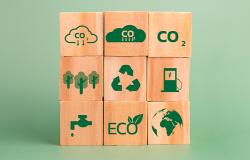
- INRAE Low Carbon
Committed to accelerating its ecological transition, INRAE has set a goal of reducing its carbon emissions by 70% by 2050 and maximizing its carbon sequestration capacity to achieve carbon neutrality, while maintaining the momentum of its scientific activities. To stay on this trajectory, in 2025 it adopted an initial five-year action plan focused on six areas of activity: equipment, scientific supplies and services, experimental unit activities, buildings and energy, digital technology, work-related travel, and daily operations (commuting, waste, and routine purchases).
Strengthening CSR initiatives to build an attractive and responsible institute
INRAE is reinforcing its environmental commitments by aligning its internal practices with its scientific goals. We are pursuing a low-carbon trajectory, which we are implementing through a participatory action plan. We are also developing strategies for adapting to climate change that integrate climate, biodiversity, and resources, while supporting initiatives led by our staff on these issues.
INRAE affirms its role as a socially responsible employer. Our values of integrity, ethics, and a sense of community guide a policy focused on the well-being and professional development of our staff. As a recipient of the HR Excellence in Research and Alliance certifications (gender equality and diversity), INRAE invests in training, managerial support, and the evolution of work practices to attract and retain talent.
Finally, INRAE is modernizing its organizational structure to become more agile and efficient. Streamlining procedures, encouraging administrative innovation, and exploring the applications of artificial intelligence are all aimed at better supporting research teams. We are seeking to find the optimum balance among responsiveness, service quality, and risk management in a constantly evolving scientific and regulatory environment.
Priority actions provide concrete ways to implement each of the short-, medium-, and long-term policy directions.
- Implement an ambitious low-carbon action plan
- Enhance INRAE’s attractiveness as an employer
- Simplify procedures in INRAE’s operations
- Develop a comprehensive risk management plan for INRAE’s operations.


